Antarctica Expedition Report Kirsty Noble
In December/January 2024/25, I was lucky enough to participate in a university module alongside 11 students from the University of St Andrews. I travelled from Edinburgh to Buenos Aires just after Christmas before taking a further flight to Ushuaia, the Southernmost city in the world. It was from here that we set sail for Antarctica. Our trip was facilitated by Hurtigruten, and we enjoyed the luxury of the MS Roald Amundsen during our free time.
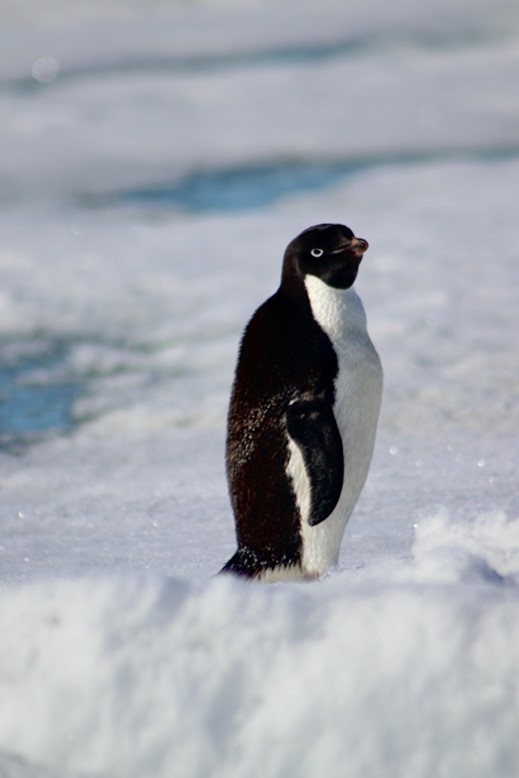
From the minute we set sail from Ushuaia, we had a constant team of 3 marine mammal and 3 seabird observers, rotating in 2-hour shifts. Thanks to this all-day observer effort, we recorded 76 marine mammal observations throughout the trip. This was around twice what the ship’s team in the bridge had recorded. One of these observations, and a highlight for us all was a sighting of a pod of over 50 orcas on New Year’s Eve, an incredible way to welcome 2025. During our 5 days on the Antarctic Peninsula, I had the opportunity to participate in penguin behavioural observations, learning survey techniques through real-life experience.


Chinstrap Penguins seen on one of our landings at Orne Harbour and Weddell Seal at Paradise
Before this experience, I had never seen a whale however now I feel confident in my ability to identify a huge number of marine mammal and bird species that can be found between Argentina and the Antarctic Peninsula, a skill that can only really be learnt through hands-on experience. Many of the expedition staff were also incredibly experienced in Antarctic biology with several of them having spent time at an Antarctic research station. Speaking to someone who had spent a winter at one of these stations was a fantastic opportunity and truly inspiring.

me on the bow of the MS Roald Amundsen on the Weddell Sea.
I was one of the few who were lucky enough to avoid sea sicknesses, even through the notorious Drake’s Passage where we experienced over 7 metres of swell. This meant I could maximise my time on the deck where I was witness to the majority of the significant observations our team recorded. I also thoroughly enjoyed watching the changes in the sea and icebergs as we sailed around the Peninsula and back North
On our return to Argentina, we stopped by the Falkland Islands, home to one of just 7 Black-Browed Albatross colonies in the world. It was on our return journey that we had the opportunity to present our findings to the passengers of the ship, many of whom were particularly interested as to why we were so often found on the bow of the ship in all weathers. This was also a great opportunity to practice science communication, finding a way to explain complex biological methods and findings to those less experienced in the field.
In the coming weeks, we will collate all the data we recorded throughout this expedition and analyse findings alongside the data from previous St Andrews Antarctic expeditions. In doing this, we can identify any trends or changes in marine mammal distribution or penguin behaviour which gives us an insight into how the colonies are coping with changing conditions. Surveys like these also inform subsequent ships of marine mammal hotspots and help to create zones with maximum speeds to minimise whale strikes. We also have plans for outreach activities at Dundee’s Discovery Centre where we will be able to share our experience with the public and discuss the importance of sustainable Antarctic travel and marine-protected areas.
This expedition was an incredible experience and one that I am sure I will never forget. The opportunity to gain experience in so many polar survey techniques while still an undergraduate student has been amazing however it also cemented my passion for Biology. Getting to observe so many of the species that I have learnt about in the last 3 and a half years of my degree has been an experience most students in my position cannot relate to. It is in part thanks to the Neil Mackenzie Trust and their generous grant that I was able to participate in this module at all. I would like to give my huge thanks to the trustees for greatly aiding in my fundraising for this experience.


Black-Browed Albatross colony, Falkland Islands (left) and Hourglass Dolphin in the Drake’s Passage (right)
 The Neil Mackenzie Trust