Title: Two Months on Two Wheels: Some Reflections on Cycle Touring France

John Wragg
June 4th to August 30th
Ahh Paris. The Eiffel Tower, romance, baguettes, fine wine, and a bubbling excitement for the Olympics. But alas, I was in Charles de Gaulle Airport feeling sick to my stomach, with a bike to rebuild, and 70 km till I reached my first checkpoint before night came in a few hours. What had I gotten myself into?
This trip had so many twists and turns, detours, roadblocks both mental and physical and more. I thought I’d share some of the most helpful tips, tricks and lessons learned to help you in your future bike travel adventures.
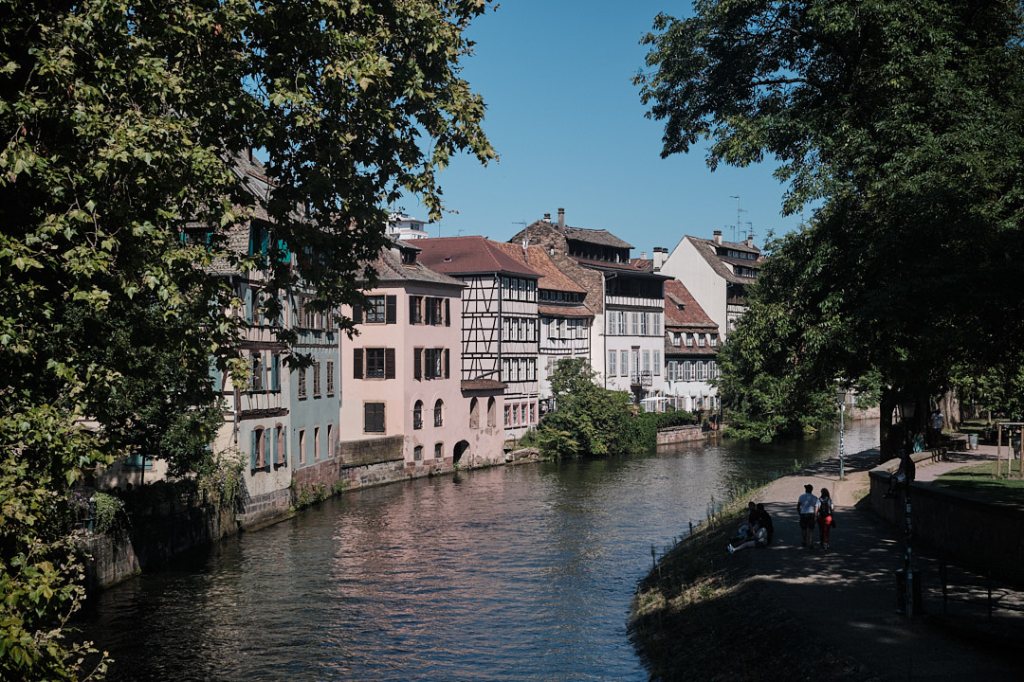
Tip 1: Speak the local language and then talk to people.
While not always possible to learn the local language, my goodness it’s tremendously enriching when you can.
Lost in farm country in the Swiss Normand Alps, time was running out before I ran out of daylight. I had bombed down this hill to get to a river which should have saved me some time to get to my accommodation. Only, the road/path that was supposed to get me through to the main road didn’t exist, despite Google Maps trying to force me through impenetrable hedges and houses. My bags laden with bottles of cider, I was not about to reclaim the hill I came down. I physically would not have been able to ride up the 10-degree slope on my loaded bike. There was a narrow gravel road that supposedly got me back to the road following the north bank of the Noireau River, but I wasn’t about to trust Google Maps a second time when it was the reason I was in this predicament in the first place. The Swiss Alps lived up to its name with all its hills. I was nearly defeated. Even a 3 km detour over the passerelle Arromanches felt like a herculean task. Looking down at my phone to find a way out, I realised I had no data or cell service. I was stuck in this gulley with only myself to rely on. I peered over the tall fence, and just my luck, I saw a lady leave her door with a basket full of laundry.
“Bonjour!” I cried out.
She was turning all about, unable to find where my voice was coming from. “Je suis en haut!” (“I’m up here!”). She’d probably never had a conversation yelling over a high fence with a lost cyclist. I explained my predicament and she was able to guide me to this narrow gap between the properties that had an overgrown path with the prickliest of shrubberies. Now lost in their field, I saw her husband stooped over a little fence he was building. Feeling beaten, I sheepishly asked how to get out of their field and back on the road. In a thick country accent, he gracefully pointed out to me where the bridge was 100 m away and wished me good luck. This was my first legit realization that I could not count on people knowing English and that I couldn’t count on technology. Back on the road, I was so proud that I was able to clumsily navigate myself out of that situation with my language skills. These events were a sobering revelation that mental fortitude is also a skill that needed to be worked on, to keep me thinking straight in stressful situations. This was also a side lesson in that shortcuts only make for long delays, but they also make for good stories and learning experiences.

In Bordeaux, I was hosted by an extremely generous man named André who took me on a tour of his neighborhood and rode out with me part way to my next destination when I had to leave. We had a profound discussion on route planning and must see locations on my way to the Mediterranean. I told him I would love to see the old castle city of Carcassonne but that I just couldn’t find any good spots to sleep the night there. On Google Maps I had scouted some potential locations in the mountains, but I wasn’t about to gamble on myself being able to cycle up a mountain route at the end of a day. Having gotten to know me over the day and judging me to be a decent person, he called up an old work friend that lived a couple steps from the old castle and secured me lodging for that night. I think because of my French ability in being able to form a connection and being able to express my needs and desires in an eloquent enough fashion, people were willing to go above and beyond to help me. More than they would for any old tourist.
Tip 2: Know your primary goal.
There is so much to do, so much to see, so much to eat on a trip, how could you possibly do it at all? Don’t try and do it all, and risk burning yourself out and feeling disappointed in yourself. My fourth day in, I already had to take a rest day. My knee ached beyond belief; I could hardly move. What a waste of a day! I thought to myself. Eating breakfast in the living room of my host, I thought about how going into this trip, my primary goal was to engage with French people and speak French with them, using cycling as a means to achieve these interactions. My goal wasn’t to see castles, visit museums, and eat in restaurants – albeit nice things in and of themselves. I decided to make the most of this unlucky injury. Pierre, my host’s young son, was playing in the garden, and I decided to join him. I quickly noticed the water guns were out on the front lawn. I filled them up, gave one to Pierre, and we waged war against each other, bringing battle once again to the fields of Normandy. After a solid soak, Pierre and I picked fruit from the back garden that we brought in for a pre-dinner snack, berries, cherries, and apples, to accompany fresh crepes. After the dinner, we were glued to the TV as the French election results came pouring in. Looking back on this day, there were no chivalric castles, mighty mountains, or salty seas. It was good conversation, and a sharing in local culture and customs, and I couldn’t have asked for anything more from that day.

In the Loire Atlantique, I still could not shake off the knee pain incurred early on. However, this led to one of the more memorable moments of the whole trip. I had only planned to stay a night with my host, Michelle, in their house at Saint-Père-en-Retz. I was telling the family that had assembled for a yearly familial reunion that my knee had been killing me. Rather than continue on, they suggested I join them in fishing for mussels and oysters by the beach the following day. Feeling homesick, and a bit lonely as a solo traveller, hanging out with new friends at the beach was exactly what I needed, and frankly, what I wanted out of this trip.
Despite numerous injuries that ultimately could have killed the vibe of the whole trip, I decided to turn this difficulty into a strength of the trip, changing my perspective entirely and centering myself on this primary goal, to salvage memories that will inspire or remind me of my strengths in future trips to come.
Tip 3: Pack light and Practice maintenance.
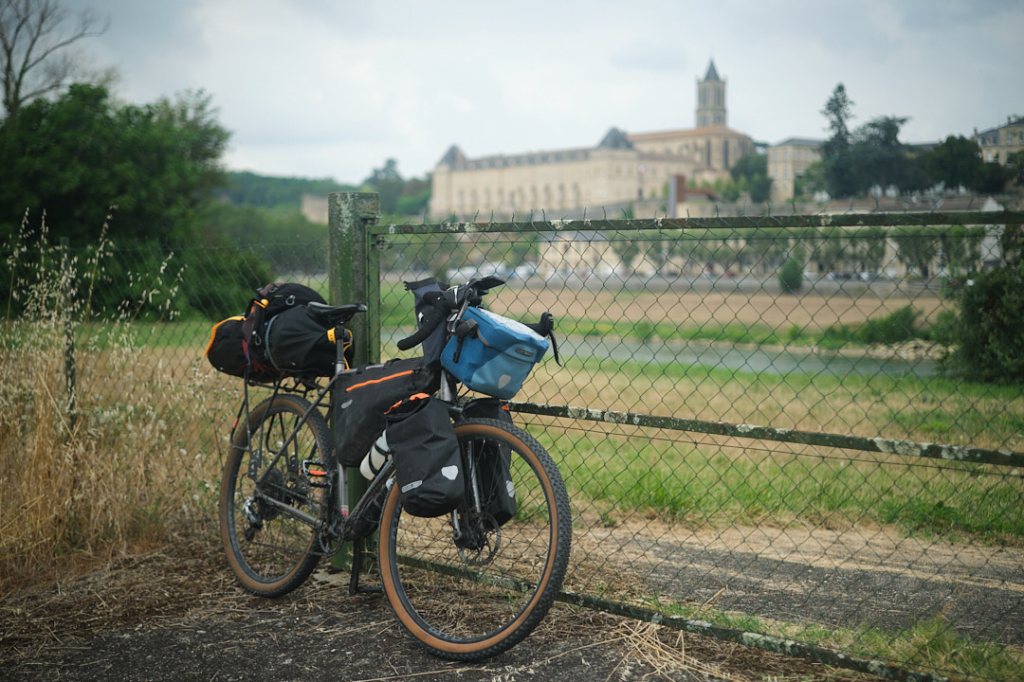
I found that these two tips coincided closely with each other on this trip. In total I had four flat rear tires, and I believe the weight on the rear of my bike was a reason for having to constantly deal with flats as I didn’t have a single puncture in the front, which you would think would get pierced first by a sharp object.
Even if my suspicions were incorrect and that the weight had nothing to do with the punctures, I still had to take off the bag attached to my rack by Voile straps before I could even begin the work. I think if I went tubeless this wouldn’t have been a problem, because a lot of the flats were caused by tiny leaks rather than a large puncture.
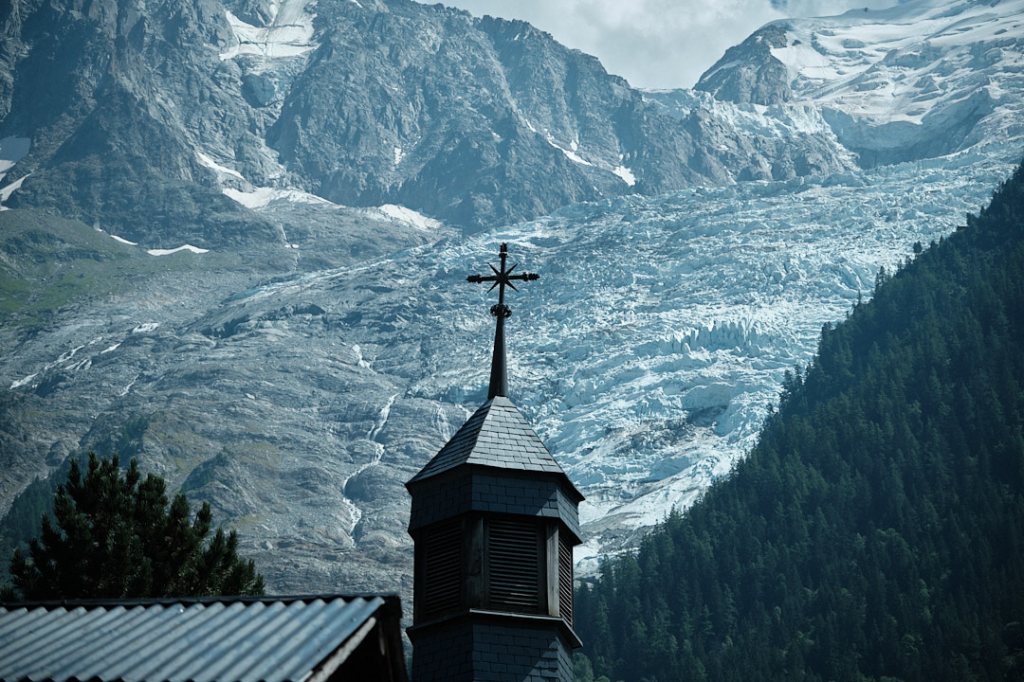
Due to fatigue and the pain mentioned previously, I truly wish I brought even less stuff – and many of my hosts who were cycle tourists and bike packers themselves thought I was travelling light. On so many occasions I opted not to take a more fun route because my legs were telling me that if we didn’t take the chill flatter route, we just wouldn’t make it. I nearly missed out on the Alps because I was genuinely too tired to cycle into them. But I was lucky. Two weeks before my trip I encountered a family waiting for the ferry to Powell River who were speaking French. Looking for opportunities to practice, I struck up a conversation and told them that after I finish with this tour on the Sunshine Coast, that I’d be in France. They ended up giving me their phone number and address and told me to come see them if I was in the area. The day before departing Lyon, I had to make up my mind: go north, which is the easier route along the river, or take a detour to the Alps, which would have been much more of a commitment. I messaged that family saying I didn’t think I had the energy to make it to them but if they were close by I’d love to see them. Coincidence had it that they’d be in Lyon anyways and that they would drive me to their place to stay with them for a while. I felt guilty for taking a car ride, but I’m sure glad I did. Being able to ride to Chamonix and then getting the downhill ride out of the Alps into the valley was breathtaking. Looking back, if I didn’t have to carry so much I might have been able to ride there on my own, feeling more accomplished and legitimate. I might have had the strength to tackle Mont Ventoux, a famous tour de France climb. Even back in Sète, I abandoned the Mont St.-Clair climb 25 m in because it was far too much of a challenge for me that day, even though I had only been riding on flat roads the whole day.
Shave weight like your trip depends on it, and you’ll be glad when you feel more capable and spirited through your rides; you’ll likely also save time on rear tire mechanicals.
Some concluding thoughts:
Two months on two wheels taught me that I was more capable than I thought I was, that I was stronger and more resilient than I ever knew. From the rainy rolling hills of the north, the hellish heat and humidity of the south-east, and the majesty of alpine storms to the west – I rode through it all. From crippling food poisoning where I was on the verge of calling it quits and flying home early, to my first imperial century going farther than I had ever thought possible, I experienced the tremendous highs and deep lows of solo travel. Thank you to the Neil Mackenzie Adventure Grant for helping make this trip possible.
May the wind be always at your back.
 The Neil Mackenzie Trust