Empowering Women of Nepal Expedition – Anna Fleming
“In February I went on a 4-week expedition to Nepal to meet, interview and explore with trailblazing women who are transforming society and mountain culture in the Himalaya. In 1994, Lucky and her sisters Nikki and Dicky Chhetri established 3 Sisters Trekking Company the first ever female-led adventure trekking company in Nepal. In the patriarchal society of Nepal, women did not work as mountain guides: they were considered ‘impure’ because they menstruate and were not allowed in the mountains. Meanwhile, female trekkers were experiencing difficulties with male Nepali guides who expected ‘certain things’ from western women.
Lucky and her sisters have changed all this. Since 1994, they have trained 2000+
Nepali women to work as mountain guides through Empowering Women of Nepal.
Lucky invited me to Nepal in February 2025 for a month, to observe their training
programme with a new cohort of Nepali girls and women, to interview them and go on an adventurous trek together into the Himalaya. The expedition was a great
success. I gained a deep immersive understanding of their work in action and now,
having returned to Scotland, I will share these insights and experiences widely
through my own work as a writer and mountain professional”.
We are looking forward to seeing you for our 3rd Supporters’ Open Day on 23rd August at Farr Hall IV26AX. The event is free to anyone who has donated to the Trust this year, and is open to all. If you haven’t already, we will ask you for a small donation when you arrive. It is a chance to get together, meet others and enjoy a day with friends old and new. You are welcome to join in all or just part of the day.
Morning Activities will include climbing/bouldering, paddleboarding, guided walks, childrens’ yoga and a stonoga (centipede).
Afternoon will include a chance to talk to us and recipients about the Trust over refreshments. There will be short talks by grant recipients, and a bouncy castle. There will also be opportunities to spend some cash, in aid of the Trust!
The day will culminate in an early evening Barbeque.
We are also looking for previous grant recipients to give a 5-10 minute talk (or just talk informally to supporters), helpers to assist with activities (including children’s), make, serve and clear up refreshments, fundraising tables, BBQ, etc. If you can help, please get in touch: theneilmackenzietrust@dr.com
Can you help? We are in contact with an Australian family travelling the world by bike. They are on Arran at the moment, heading for the Outer Hebrides then Inverness, Edinburgh and Newcastle. They are looking for hosts, and would like to meet schools, outdoor groups including, for example, D of E, guides, scouts, etc. If you can help, there is more information on P3 below. Also: www. swagfamily.au
News
Thanks to all our supporters and sponsors. Special thanks, this month, go to Duncan Grant and Elliott who raised £1,405 for us by completing 50k Ultra X on the south side of Loch Ness on 4th May. Also thanks to Hawco and The Inverness Car Company for their donations.
Grant news: The following recent applications were successful: VOC Neil Mackenzie Adventure Grant – annual award to member/s of the University of British Columbia Varsity Outdoor Club. 2025 grant has been awarded to a group of members to go for a ski trek in the Monarch and Ha-iltzuk icefields, in the Coast Mountains of British Columbia. Educational Expedition Grant: Kirsty Dinning will receive a grant for a research expedition to Ecuador. Expedition Grants: Schoolgirl Anna Lafferty has a grant to go trekking in the Hardanger Plateau in Norway. A group of nine climbers from the Highlands, has been awarded a grant towards establishing new rock climbing routes in Kyrgyzstan. Small expedition grants have been awarded to two groups of students from UHI Fort William.
More dates for your 2025 diary:
19th July: Come and see us at the Highland Gathering, Corriegarth Estate, Gorthleck, near Inverness. 12 – 4pm.
29th November: St Andrew’s Eve ceilidh, Farr Hall IV2 6AX to celebrate 10 years of the Trust. Look out for tickets from July. We will be looking for helpers – so let us know if you are coming and what you can do to help.
Skills training reports: Anne-Maelle Penot and Daniel King from Edinburgh University Sailing Club completed their RYA Day Skipper training in Largs, in February.
“The aim of the course was to become competent in skippering a small yacht. This included: preparation for sea, deck work, navigation, pilotage, meteorology, rules of the road, maintenance and repair work, engines, victualling, emergency situations, yacht handling under power, yacht handling under sail, passage making and night cruising.” Daniel “The weather was typical for February; it was cold, and clouds obstructed the sky for most of the week. A few snowflakes greeted us on Monday morning, leaving the mountains of Arran beautifully dusted in white. The wind ranged from moderate to strong, culminating in a final-day gale that kept us docked on Friday. Going for a Day Skipper course in February was certainly a bold choice, but it prepared us for the toughest Scottish conditions. I dare say we did pretty well and thrived despite the cold and wet weather.” A-M “The week was over and with it I had gained my RYA Day Skipper certificate. This allows me to charter small yachts. ………The course has also taught me new knowledge of handling the boat and sailing generally. I hope to be able to pass these on back to the Edinburgh University Sailing Club (EUSC). Whether this be the West Coast Cruise later in the year or through weekend sailing sessions…….. I see that this course lays a basis for gaining further experience sailing. I enjoy sailing for the experience itself, being on the water allows a new perspective and you tune in to the weather, wind and waves around you. …………..By the end of the week we had sailed around 144nm, including 7h of night sailing, over 4 days.” D I had a great time both learning how to be a skipper and living for a week with a fantastic group of people. I am very grateful to the [Neil] Mackenzie Trust for supporting me in this journey and I am looking forward to skippering a yacht for the first time this summer – putting what I have learnt into practice. My goal is to follow Nick’s mantra (“The moment you become a Day Skipper, you become a teacher.”) and keep sharing the sailing knowledge and passion!” A-M For full reports see www.theneilmackenzietrust.com
G’day! We are a family of 5 from Australia (mum Nicola, dad Andrew, Hope 11, Wilfy 9 and Jeannie 2.5) and we’re travelling the world by bike.
We have been on the road now around 15 months cycling through New Zealand, South America and now the UK. As teachers we school the children along the way and they have a great time meeting other people and exploring the world slowly. We often sleep in tents, but also love the hospitality we’ve received along the road staying with locals, eating together, sharing stories and learning about the places we travel through.
We also communicate the adventure to schools and programs across the world for free via our website www.swagfamily.au – along the way we also visit classrooms to share our love of adventure.
If you would like to know more about us you can check out the adventure on Facebook and Instagram via @swagfamilyhughes or the whole story via www.Patreon.com/swagfamily
We are looking for places to stay, people to connect with and schools/programs to visit along the way so… If you would like to host us or know someone along our route that might be interested please get in touch via Nicola@swagfamily.au
Route:
We’re currently on the Isle of Arran and heading to the Outer Hebridides, back to Inverness and down to Edinburgh/Newcastle for around mid June.
The Neil Mackenzie Trust is very excited to be assisting (in a small way) Claire Mellish (Tuppence) who is part of a team who will be attempting to be the first in history to cross the Northwest Passage on a rowing boat in a single season. This is one of the “last great firsts” on earth and we hope to be able to post updates, from her, during the course of the summer. The following is extracted from information we have received from her to date.
The Northwest Passage Expedition – The End of The Row, updated 2nd October
After making the decision to end the expedition at Cambridge Bay we had to wait at anchor for a few days for the right weather to allow us to get across Queen Maud Gulf to Cambridge Bay.
It was a little frustrating knowing we were so close to the finish (only about 25-30NM) and having to sit and wait for days but there were strong south easterly winds blowing and we wanted to make sure we could get across safely. We were all pretty good at waiting by now and continued our four hour on- four hour off anchor watch routine. The nights were quickly drawing in and we were getting around 10 hours of darkness. We did manage to sneak a little closer to Cambridge Bay on Thursday 14th and anchor in the shelter of the Macalpine Islands just off the coast. On Saturday 16th we were predicted to have a calmer day and just as were lifting our anchor in the morning to set off we received a hail on the VHF from Royal Canadian Coastguard Vessel Sir Wilfred Laurier. They informed us they were 5NM away and were putting their rapid response vessel in the water and would be with us in in 15-20 minutes. We told them that we weren’t in distress, but they asked us to sit tight and wait for them to arrive.
Upon arrival one of their crew came aboard Hermione and chatted to crew members to find out how we were all feeling and assess our physical state (we were all fine other than being tired and a little cold). The coastguard crew told us they had received a call from their HQ telling them we needed assistance (perhaps it was a concerned citizen, we aren’t totally sure). Since the coastguard had come all the way out to see us (thankfully they weren’t needed anywhere else at that time as the last thing we wanted was to take up search and rescue resources unnecessarily), they requested that we came with them onboard Sir Wilfred Laurier and that they would tow Hermione behind. In the end, however, it was decided that we five crew would go onboard the coastguard vessel with three (Leven, Livar and Davie) remaining on Hermione and Sir Wilfred Laurier and their RIB would escort Hermione (at her own speed) across the bay and into Cambridge Bay.
Coastguard Rib alongside Hermione
The wind died down as predicted but the fog rolled in reducing visibility to perhaps 20 or 30 metres. Hermione motored along under the power of the electric engine at around 5Kts, so we made good time getting into Cambridge Bay. On board Sir Wilfred Laurier five of the crew (me included) were treated to warm beef broth to warm us up and they kindly provided us with lunch. It was our first taste of hot fresh food since leaving Pond Inlet and was truly delicious. It was wonderful to get an insight into life on board a coastguard vessel and we met lots of interesting crew, including a Royal Naval officer who was there to learn about ice patrols before going aboard HMS Protector (the RN’s only ice patrol ship) in Antarctica. The medical officer spoke to us to assess that we were healthy and chatted to myself and Daniel, who is a doctor, about the medical kit we had on board and any issues the crew had been having (very few thankfully).
Once we reached the ranges just outside Cambridge Bay, we were taken ashore in the RIB so that we could go ahead and organise things for Hermione and find places for crew to stay. We said our thanks to the captain and crew of RCCG Sir Wilfred Laurier and I was delighted to be presented with a commemorative ship’s coin from them. The work that the coastguard and S&R teams do is invaluable, and we are so grateful to them for their quick response and how they dealt with the situation. Thankfully we weren’t in any distress, but the coastguard team were wonderful to deal with and we cannot thank them enough. Once back on dry land (a few of the crew had the wobbles whilst they adjusted to their legs walking on hard ground again) we were stopped by the RCMP who needed to see us about some paperwork. Due to the coastguard not knowing much about us when they collected us, they had to tell the RCMP they were bringing 8 people ashore to Canada. In small communities like Cambridge Bay there is no customs office and so it is up to the RCMP to complete all necessary immigration paperwork. We had to head to the station and explain that we had already cleared customs in Canada and hadn’t left it. Unfortunately, there was some confusion and immigration thought we had headed to Greenland and then back again. Eventually we sorted everything out and were also able to start making arrangements for the necessary paperwork that was required to keep Hermione in Canada over the winter. The RCMP were also brilliant and dealt with everything very efficiently and so we are also extremely grateful to them as well.
At Cambridge Bay
Once the remaining crew and Hermione arrived, we were able to grab our kit and head off to various hotels.
The last time on Hermione when she arrived in Cambridge Bay
Eventually I reached Toronto the following evening, via Vancouver and Kelowna and was thrilled to be reunited with family and friends. The expedition and the delivery trip were a once in a lifetime experience and even though there were many aspects that could have been different and things improved, it would not have been the experience that it was without all the low points as well as the highs. I would like to thank everyone who has supported me in whatever form. From sponsorship to messages of support I am touched by the overwhelming amount of kindness I have received. This expedition has undoubtedly changed me as a person. I have grown in ways I could never have imagined, and this is an experience that will remain with me forever. Until my next update I am going to enjoy some rest and relaxation in Canada for about a month, before flying back to Scotland. The warm weather in Southern Ontario is a mighty contrast from the near freezing temperatures of the Canadian Arctic. I am going to allow my frost-nipped fingers and toes to recover and am glad to be sleeping in real bed and getting to eat fresh food again. It was sad to say goodbye to the crew, but we are all bonded for life now and I hope to see some of them again very soon.
North West passage update – 15th September
‘It is with mixed emotions that I send this email. After battling winds so strong that we couldn’t steer properly and ended up making much of our progress by drifting sideways, rather than actually rowing forwards, we have anchored tucked in behind a small island at Cape Alexander. We have been waiting for the weather to improve to allow us to proceed. As the weather does not look favourable to allowing us to continue safely, after much discussion we have decided that we will be ending the expedition here are this time and will make an attempt to move back to Cambridge Bay where we will overwinter the boat and fly back home.
There may be the possibility of completing the rest of the journey next year. At this stage I can’t say whether I am able to be a part of this, but no matter what happens doing even half of the NWP feels like a huge achievement and I will be stepping away with my head held high, proud of my achievements and glad to be safe and sound.
This decision to stop was not made lightly but in the Arctic the one lesson that I have learnt is that you cannot underestimate the environment and have to consider all risks. We are getting later in the season and the temperature will only continue to fall. The darker nights make navigation both difficult and potentially dangerous. The combination of mixed currents and strong winds makes navigation extremely difficult and we have to avoid getting into a situation where we have no escape route and could end up run aground or smashed up on rocks.
I am incredibly proud of myself and the crew for what we have achieved so far. This journey has been a true once in a lifetime opportunity. I am so grateful to all of the people who have helped me get to the start line and to all the new friends and contacts we have met along the way, who have been kind, generous and many of whom have become firm friends.
The Arctic will forever hold a special place in my heart. It is a magical part of the world but not without its challenges. It can be beautiful and serene but also harsh and dangerous and should not be underestimated.
Our focus will now be getting to Cambridge Bay and then flying home. Once back on dry land, reunited with friend and family, and after a bit of time processing everything, I will post more about the entire experience and reflect on it all. For now though there may be only the odd update as I focus on getting back home and fitting back into normal life.
Thank you for all the support I have received and please do still donate to our charity “Siobhan’s Trust” (link can be found through the expedition social media pages) if you would like to express your support for myself, the crew and the expedition.
I will write again once we have landed at Cambridge Bay and worked out how to get home and what to do with the boat for the winter.
Kindest regards
Tuppence’
Expedition update – 9th September; report on the second week
We have completed the first week and start the second week on Day 8 Thursday 24th August sat at anchorage waiting for the wind to die down. Whilst here we have had a second sighting of a polar bear in the early hours of the morning.
The boys sitting on deck at anchorage
There is little that the crew can do when we are waiting at anchor than to sit patiently and wait for weather to allow us to continue our journey further south. Watch/shift routines have to be maintained and are changed to 4 hours rather the 2 hours when we are on the rowing deck.
In the early hours of the morning of Day 9 we had to reset our anchor as were dragging in the strong winds. It was a battle against the wind to get back to shore and the rough weather made it hard to grab the anchor rope. Once safely back close to shore and anchored and in the afternoon, we managed to make our way a little further south to the edge of the northern side of Cresswell Bay. We encountered a snowstorm, with thick flakes hitting us horizontally from our starboard side and eventually the wind was too strong to continue, so we anchored for the night until the weather improved.
On DAY 10- Saturday 26th August I was feeling rather tired and ill today, I think feeling the effects of the cold a bit. The wind direction changed to be more favourable at around 1pm and so we set off crossing Cresswell Bay and made good speed. We passed a magnificent iceberg as we got closer to land on the south side of Cresswell Bay. We anchored for the night further down the coast and managed to get a bit of sleep.
DAY 11- Sunday 27th August saw us arrive at Fort Ross, the last Hudson’s Bay Company trading post to be established. It was active from 1937-1948 and two of the old cabins remain. We beached the boat so we could come ashore and explore the cabins.
The crew outside the cabin at Fort Ross
We signed our names in the visitor’s book and had fun looking back at the previous visitors (spotting many familiar names from our fellow 2023 NWP crews). After a tiring day half of the boys slept in the cabins and the rest of us went back to the boat to sleep.
It is important for me to mention that on Sunday whilst battling strong winds just south of Cresswell Bay we broke a dagger board, this is not the end of the world but is certainly an inconvenience. It became apparent we weren’t going to be able to anchor again safely where we were and needed to get to a more sheltered location, the wind was very strong, and we would have been blown into a potentially dangerous situation and so the decision was made to advance to Fort Ross under the power of our electric motor. The very reason we kept the motor on board was for safety and so we are glad that has paid off as up here safety is paramount. The only real change is that at the end of this expedition we can’t make any claims to have been fully human powered throughout the passage, this has been a bit of a blow to the team. For myself this isn’t a major concern, being up here and rowing any distance in these areas is an achievement and I’m not up here doing this expedition to get a nice piece of paper with a world record on it (yes it might be a nice added bonus, but this expedition is about pushing myself and getting the opportunity to experience this truly unique and magical part of the world). So moving on, we keep rowing forwards, we learn from the past and we place our sights on making sure that however far through the passage we get, we ensure that we get there safely.
The next day – DAY 12- Monday 28th August we remained at Fort Ross, and it gave us a chance to rest up and explore this wonderful part of the Arctic. Since we aren’t leaving until Tuesday afternoon I spent the day exploring around the area. In the morning a polar bear was wandering down the hillside towards us, it got about 500m away and then stopped and sniffed and must have caught a whiff of us as it turned around and scarpered.
The polar bear between the cabin and the boat
Nothing much to report for day 14, just waiting for weather. There was a window of opportunity to have left in the evening with light Northerly winds throughout the night, but it was decided to wait for a potentially better weather window due to arrive Friday/ Saturday. Moving through the Arctic is about patience and waiting for the right weather windows, but at the same time pouncing when the opportunities occur. Even if only a small window exists, and you only move a small distance before having to anchor again and wait some more it is still important to move forwards whenever possible. Weather is unpredictable up here and the forecasts are often not accurate, so we often have to see if the weather window we are waiting for appears. Another serious lesson learnt is that you can never prepare enough for the conditions here. Prior planning and safety are of the utmost importance.
DAY 15- Wednesday 30th August was spent tidying the boat as we would not be leaving for a day or two. I took advantage of being off the boat and knowing we aren’t leaving for a bit to do some laundry, so that I can have a more frequent change of clean clothes (which will be a lovely treat). The boys found a huge sack of pancake mix and so I whisked up a batch of pancakes for a sort of brunch, which was just delicious. Whilst we have been at Fort Ross the crew took time to build a cairn and affix a plaque to it that Livar had brought with him.
The first of September started with being woken up by Davie alerting me to the fact there was a Polar bear on shore looking at us. It was very close to the boat, about 25m which was only just offshore, and it was moving closer quite quickly. We shouted at it and made some noise, and I radioed our shore team as well who had their deterrents at the ready. Eventually it did go away but it was a little close for comfort. It then lay down a 100m away and was there for a long time just lying. Finally, it moved on. It looked to be in very poor condition. At this time of year, they’re at their skinniest and I suspect it was an old bear that was desperate for food and that’s why it was trying to come towards the boat. We packed up the cabin and by 12:30pm we were on the move into Bellot Strait. It was a little sad to say goodbye to Fort Ross, but it is good to be on the move again and making progress.
Half-way through Bellot Strait we passed Zenith Point, on the northern edge of the Boothia Peninsula, which is the Northernmost point of mainland Canada and North America (located at 72°00’N, 94°39’W). Our evening has ended with silky calm seas, a beautiful sunset and a lovely moon shining down on us before disappearing behind the clouds. The wind completely died down this evening, but we are due to get a tail wind and some quite high speeds, so we shall see how that pans out, we may need to seek an anchorage to shelter for a bit.
This second week has been tough, but also pleasant with some questions being asked. We have noticed the temperature has dropped and been getting the odd snow shower, this means we have had to be more vigilant of the cold exposure to each individual as it can have serious effects to people’s judgement and thought processes. The days are shortening quite quickly, and the 24 hour daylight is slipping away fast and so there will be more rowing in darkness over the next stage of the expedition.
Update – 26th August; The Row has started – report on the first week
DAY 1- Thursday 17th August The crew had its final landside breakfast at the local hotel prior to setting off. Once we left the harbour the swell picked up and it was a bit of a battle all afternoon. We covered lots of ground though and are making progress. It’s been a bit of a baptism of fire for the crew, but everyone seems to be doing well. As I finished my shift, I was treated to seeing a beautiful bright red sun on our port side and a seal popping it’s head up to try and say hello every now and again.
Leaving Pond Inlet
DAY 2- Friday 18th August A slow day battling head winds as we tried to move north in Navy Board Inlet. We made up to the anchorage on the west side that we used on our way south. Tonight we are all sat on anchor watch, and the wind suddenly picked up a bit, so we hoped our anchor will continue to hold.
DAY 3- Saturday 19th August We were at our anchorage until 1pm and left with a South Easterly wind helping move us on our way up Navy Board. As we reached Tay Bay (where we first anchored when dropped off by Ugly Betty) we made the decision to keep going as the weather in Lancaster Sound looked good. During the day I took a couple of cast measurements for salinity with our CTD pod, for New York University. I also collected a piece of sea ice to melt and put in a bottle, which may hopefully be used for measuring microplastic levels.
DAY 4 & 5- Sunday 20th and Monday 21st August Today we could see Devon Island in the distance to the North as we slowly made our way along Lancaster Sound. The wind picked up and we had quite a swell with some biggish waves. We had a tail wind but the currents come from every direction so we didn’t pick up much extra speed. I am still finding the two hour shifts hard to adapt to, very hard to wake up, and then hard to get to sleep, hopefully I’ll adapt with time. It’s quite chilly and there has been a lot of fog which makes navigating much harder, as more concentration required, and there are no fixed points on the horizon to aim for.
DAY 6- Tuesday 22nd August Today we slowly turned down towards Prince Regent Inlet from Lancaster Sound and it has been very misty. Keeping morale up and passing the time on shifts with music, or Harry Potter audiobooks for all the crew. We are making our way across Prince Regent to get into the lee of the land on the west side, and then we will head south. The mist began to lift around mid-day and as we have slowly made our way south down Prince Regent inlet, we have been able to see the cliffs of Somerset Island. The last shift of the night was beautifully calm, with the sun glistening through the clouds and a couple of inquisitive seals coming nearby and following us for a bit. A few birds swooped down low and circled the boat a couple of times and the only noise to be heard now is the gentle splashing of the oars. It’s incredibly tranquil and a lovely end to the day.
Rowing in the mist
DAY 7- Wednesday 23rd August Making our way down Prince Regent Inlet today, staying tucked in close to the shore of Somerset Island. The limestone cliffs of the island are quite impressive, with some bits looking like battlements of a castle complete with buttresses, and other bits looking like Easter Island statues sticking out of the rocksWe passed Batty Bay this morning, which is where the ship the Prince Albert overwintered for two years whilst searching for the lost Franklin expedition. We anchored at Fury Point until the wind died down a bit and we then plan to move further south. Being at anchorage is an opportunity for us to get a few extra hours rest (we switch from a two to a four hour shift pattern), as well as sorting kit and tidying things on the boat. Whilst on my rest period I was awoken by the boys on deck. Andy had spotted the first polar bear of our trip, walking along the shore towards us. They got polar bear deterrents ready, but it turned around as soon as they waved their arms and said, “go away bear”.
Update – 26th August; final part of the delivery trip
The final part of the delivery expedition was crossing Baffin Bay from Greenland to Canada.
The journey across Baffin Bay
Originally our plans were to head across from high up on the west coast of Greenland, but as the weather was not looking good, we headed back south towards Upernavik with the MV Ugly Betty towing us as it would not be safe to make the crossing with the forecast of 30kt winds.
The plan was to reach Tay Bay which is down Navy Board Inlet, on the west side of Bylot Island and then we would part company with the MV Ugly Betty at this point. After cruising through fog, we had our first sighting of Canada as we entered Navy Board Inlet. What a journey it has been so far. Only about 100NM to go before we reach Pond Inlet and the start of our rowing expedition.
On Wednesday 9th August the sea was pretty choppy and there was lots of fog. As we approached Bylot it was pretty foggy, and we had a very unlucky collision with a bergy bit. Hermione got a dent on her port side but not too much damage done. The evening was gorgeous as we arrived at Tay Bay and this was where we had to say goodbye to The Uglies. After anchoring we had a celebratory glass of bubbly for making it to Canada and then started on our usual 4 hour watch shifts.
Celebratory glass of bubbly
Now that we are under our own power again, we waited at the top of Navy Board Inlet in Tay Bay to allow the conditions to improve. We headed south and then decided to try and cut to the west shore of Navy Board, as that is where there was less ice on the charts. Unfortunately, we had some wind being funnelled down Navy Board, which usually would have been a lovely tail wind but made it harder to manoeuvre through ice. We persevered for a bit but didn’t like the conditions so headed back to the East Side and decided to anchor for the evening. It was a truly beautiful spot yet again and we saw a couple of Bowhead whales and some seals whilst on anchor watch. The sea began to freeze in a thin layer in places, which was mesmerising to watch little frozen circles of ice drift past. In the afternoon we were hailed by SY Ocean View, which had anchored in Tay Bay the previous night. Saturday 12th August was just an overall fantastic day and I have climbed into the cabin after my last watch shift smiling after such an enjoyable day.
We finally made it to Pond Inlet on Sunday 13th August – having set off just before 4am with beautiful calm seas. There was very little ice, and it was easily navigable. A very pleasant morning.
Pond inlet
After waking for my next shift at around midday it was pretty choppy and we were very close to meeting up with Marie Tharp, a research vessel which had agreed to help meet up with us. Timing couldn’t have been better as the rougher seas seemed to be causing the engine fault to glitch more and so we were fighting a battle against the wind with trying to make progress and steer whilst our engine kept cutting out. Marie Tharp threw us a line that we attached to our bow line and then they set up a bridle to tow us behind. Given the conditions we opted not to go aboard their boat as bringing Hermione alongside would have likely caused some damage. We kept steering whilst they towed us, which was a bit of a battle with the weather as well. Monday 14th August was our first day on Canadian soil. We had a bit of time together as a team just to catch up and made some plans for the next few days. Our boat attracted a lot of attention from the local kids and we had a lot of fun having them on board playing around the boat.
Local children helping us load the boat
We spent another day of organising the boat, fitting the new electric engine (for emergencies if required) and packing things like the medical kit.
Update – 17th August; the row has started!
Just a quick update today to say that the team left Pond Inlet today and have started their attempt to row the North West passage. Further info on the final part of the delivery trip and the first part of the actual expedition will follow shortly.
Rowing Hermione for the first time in the Arctic with Davie
Sunrise through the fog
Update – 2nd July
This is an update about the NWP expedition’s first few weeks covering our trip from launching the boat in Eyemouth to leaving Iceland.
I have been away for just over three weeks now, admittedly only four or so days has been at sea, but it’s been a brilliant experience. We set off from Eyemouth Harbour on the evening of Thursday 8th June having spent the day doing final preparations and checks.
Leaving Eyemouth Harbour
On our journey from Eyemouth to Orkney I got to get a good feel for the workings of the boat and really worked some muscles trying to steer our course in some strong winds and choppy weather. Watching out for offshore wind farms, boats and lobster pots was also a good way of staying alert.
We had a great few days in Orkney, and I loved meeting some truly wonderful people, from all over the world who were interested in our trip, and it was great to hear their stories as well. Whilst in Orkney, we also met Maiwenn Beadle, who has crossed the passage before, and she gave us some wonderful advice about our weather routing and passage plans. Radio Orkney also did an interview with us and this can be found on BBC Sounds https://www.bbc.co.uk/sounds/play/m001mw7p (24.3mins into the programme is when the interview starts).
Members of Orkney Rowing Club paying a visit to Hermione
Our next leg was to get to The Faroes, and we had beautiful calm waters, but lots of fog. We made great time, as we expected to take maybe 3 or 4 days and did it in just over 2 days. The fog made spotting vessels hard, even with the AIS alerting us to their presence, we couldn’t see ships until they were almost next to us, and so we had a couple of close calls with a tanker and also a pair of fishing trawlers, but thankfully all collisions were avoided, and we made it to Hvannasund safely.
There looked as if there were going to be some strong winds as we approached Iceland and we were concerned about manoeuvring Hermione into port, as she doesn’t turn well with the engine, our options were to sit and wait for the weather to pass, meaning arriving in Iceland later than planned, or possibly to get a lift on a bigger boat. Last year we had been offered a sponsored lift on a container boat to Iceland by cargo ship and so Livar approached them again and they were thrilled to help us out. We then set about making a cradle to support Hermione and a couple of days ago we motored her out of Hvannasund and into Torshavn to have her lifted out of the water and onto a bigger boat.
Motoring late in the evening to the other side of Faroe
With Hermoine safely loaded on a Cargo Ship we spent the next couple of days sight seeing on Faroe and enjoying the island’s hospitality which included celebrating Livar’s local village team winning at the rowing regatta. To get to Iceland Levan and I hopped on a plane and were met in Reykjavík by the crew of MV Ugly Betty who have kindly taken us under their wing and provided us with accommodation whilst we are in Iceland.
The next leg of the journey will be very exciting as we are to be towed by the MV Ugly Betty. So, we have had a run through of the safety protocols that the MV Ugly Betty have and worked out how we are going to attach and manage the towing of our boat behind MV Ugly Betty. So, we have just left Reykjavik and head towards Greenland, hopefully the trip will take about 6 days to reach Neuk, our progress can be tracked on the tracker that is on our expedition website. https://nwpexpedition.com/tracking/
The first two weeks have been amazing, and a brilliant experience. The best part has been all the wonderful and kind people we have met on the way, and I already know I have formed some fab new friendships, which is so exciting.
Update – posted 6th June
Although it might not seem like it things have been very busy behind the scenes and I am thrilled to announce that if all things go smoothly we will be setting off on the first stage of our delivery expedition this week (hopefully on Thursday evening).
The red line highlights our planned delivery route.
The delivery expedition will involve moving the boat from Eyemouth all the way to Pond Inlet. There will be two of us as crew for the whole journey (myself and expedition leader Leven Brown), with others joining us for shorter legs throughout. We will be moving our boat (Hermione) using an electric hybrid outboard engine supplied by E-Propulsion. Our journey will take us to Orkney, Faroe Islands, Iceland and Greenland before finally reaching Pond Inlet. We estimate the journey will take around 45 days and will be hoping to update you all as we go.
With not long left until we depart, the final preparations include repacking kit to make sure we have everything, packing our rations into bags for each person per day, as well as thoroughly enjoying the last few weeks that will be spent with the luxuries of fresh food, indoor plumbing and a comfy bed.
Posted 5th May
“As a young woman in a difficult profession who has recently spent most of their time focussing on books and studying, rather than the outdoors and adventure, I want to use my experiences from this expedition to help positively influence other young individuals, especially women, to get outside and get exploring. I want to also be able show others that when you put your mind to something you really can reach your goals, no matter how unattainable they may seem at first.”
THE ROUTE
The NWP is the route that connects the Atlantic and Pacific oceans between Canada and Alaska. The team will start their expedition at Pond Inlet on Baffin Island and intend to finish at Port Barrow in Alaska.
The search for a sea route through the NWP began during the 15th century with European explorers trying to find a trade route through to Asia. Many famous explorers such as Captain Cook and Sir John Franklin attempted to complete the passage but were unsuccessful. In 1906 Roald Amusden became the first to navigate the passage successful by ship. There have been several previous attempts to row the NWP but so far none have been successful.
THE ENVIRONMENT
The sad reality is that this expedition is only possible because of the retreating ice in the Arctic Ocean. As a team we are going to use our experiences to document and highlight the affects of climate change in Arctic regions. We will be collecting data, for research into micro-plastics, in partnership with New York University and Big Blue Ocean Cleanup. The team will be unbiased in their approach to data collection and we will be reporting the facts as we see them.
Throughout the row the team will encounter many risks and difficulties including icebergs, strong winds and rough waves and potentially polar bears. Preparation is key and as a team we have all been working hard to ensure we are both physically and mentally prepared for the expedition.
As a team we want the NWP expedition to be about so much more than our efforts to cross the passage. We want to use our experiences from this expedition and the media attention gained to be able to highlight the effects of climate change and micro-plastics in Arctic environments. We also want to encourage individuals from all walks of life to get outside and get exploring, but also to take care of our oceans and be aware of the importance of ocean conservation.
We want our expedition to have a focus on sustainability and environmental responsibility and so wherever possible we are hoping to have as little environmental impact as possible.
PREPARATIONS
Preparations are ramping up now, with only a few weeks until the delivery of the boat to Canada begins. I am going to be a part of this expedition, which will see us using an electric outboard motor, rowing and possibly a small sail to manoeuvre our boat from Eyemouth to Orkney, then Faroe, then Iceland, then round the coast of Greenland, and eventually across the Davies Strait to Baffin Island. Our plan is to set off around the 15th May, although this may vary based on weather conditions. I hope that at each of our stops I will be able to provide some photographs and updates. We will be all based up in Pond Inlet, Baffin Island from late June/ early July and are expecting to leave around mid-late July (again weather is a major factor here).
Our first sea trials this week (27/4/23) involved getting our boat (Hermione) into the water and then we wanted to test out our outboard for the delivery expedition, and it was great to see how well it did. We also got rowing practice in, and found that we rowed very well together, despite massive size differences (myself being the smallest at 5ft 4.5 and the tallest being about 6ft 4), meaning our stroke lengths aren’t always easy to match but we were able to find a stroke that suited everyone. I will admit to feeling pretty sea sick on the voyage, as the boat is long and narrow and has a very particular way of moving in the water that takes a while to get used to. However, I will be taking medication in advance next time, and am convinced it is more of a mental battle whilst my body adapts to its new environment.
We are adding a new layer to The Neil Mackenzie Trust, this year. The idea is to form a group, to bring supporters and recipients together – in person or online – to have fun, bring ideas, and ultimately help to move the benefits of the Trust forward. We hope to have some form of get together in the summer, probably in the Highlands, which might include, for example a meal, BBQ or picnic, a multi-generational walk, a short presentation from recent recipients, and time to discuss anything outdoors – not just the Trust! We also expect to have a bi-annual newsletter which will include more details of how we operate. We think that this is a good way to increase interaction with the Trust. Please drop us an email with your thoughts. theneilmackenzietrust@dr.com If you would like to join we will be asking for a small donation. Anything from £1 upwards!
For the Record:
Since The Neil Mackenzie Trust was set up just over seven years ago, we have raised nearly £40,000, with the help of friends, family and supporters. As well as being able to build some reserves, we have assisted 50 expeditions and skills training courses with grants ranging from from £75 to £3,000. Destinations for expeditions have included North America, Greenland, Iceland, Europe and Africa, as well as here in Scotland. Training courses have included Winter and Summer Mountain Leader, Mountain Biking, Rock Climbing and RYA Day Skipper courses. Visit the website to see reports from recipients and how they have benefited from our assistance.
Application deadlines:
Neil Mackenzie Adventure Grant (UBC VOC members only): 31ST January.
Educational Expedition Grant: 3rd March
Other grants: No deadline. Applications considered roughly once a month. – contact us throughwww.theneilmackenzietrust.com, let us know your plans and we will send you an application form.
Johanna Hoffman completed her Summer Mountain Leader course in 2022:
“I decided to do my ML training with Pete Hills WMCI in the beautiful Cairngorm National Park in April. Unluckily for our course there was still quite a lot of snow cover upon Cairngorm and towards Ben Macdui. However, it did add on the extra challenge (and fun) to try not to touch any snow while navigating. Apart from the snow we were almost to blessed with the weather and enjoyed a week of glorious sunshine. We were a relatively small group of 4 people and it was a very informal and relaxed atmosphere in our group. Our trainer was very engaged and answered any question about the mountains and the scheme with pleasure. During those 6 days I learned a lot about navigation, flora & fauna and geology, but most importantly what it takes to become a good mountain leader. The course showed me my strengths and what I still need to work on, but definitely left me very empowered to work towards becoming a mountain leader.”
Some more excerpts from Kerri’s expedition to South Africa, 2022.
“Another task that felt surreal to me was when I took part in a rhino dehorning process on a reserve within Kruger National Park. This is still a controversial way of tackling the rhino poaching crisis, many even within the reserves are not a huge fan of it and I saw various signs along the boundary fences stating that rhino horns had been injected with a dye, something that is harmless to them but works to deter poachers as it makes the horn useless to them. However, while various methods are being researched, dehorning is still taking place. Obviously in an ideal world, you want to prevent poaching from even happening but it’s best to have all bases covered. On the specific area of Balule I was on, The Black Mambas [all female] anti-poaching team worked tirelessly to disrupt the landscape. Constantly patrolling, reporting disturbances or unusual activity, engaging with the community and making it very hard for anyone to sneak in. As a result, there has not been any poaching of big game there, like rhino, in several years.”
“Although we had weekly tasks that were required just for the basic running of the reserve, we also would check in with the researchers each week and some of us would go assist them. For example Elwenn is a French student, conducting her MSc thesis about predator interactions. The aim of this study is to determine if and how the presence of apex predators such as lions or spotted hyaenas influences the activity patterns and spatial distribution of medium-sized predators. For us, this often meant the quite simple tasks of driving to various points and then getting out and hiking to wherever camera traps had been placed in order for us to retrieve the current memory card and replace it with a new one. To document the activity patterns and the distribution of the different predator species, she has set up 44 camera traps in two nature reserves. 22 are placed in Olifants West which hosts a large density of lions, and 22 additional cameras in the Blyde Olifants Confluent Conservancy Area which doesn’t host any lions and therefore act as a control plot. They are placed in specific areas that over time we know have that particular species occupy the area, and pointing at watering holes and so on. On one of the field days we collected all the SD cards and replaced them with new empty ones and checked if the cameras were still facing the right direction. Elephants, baboons and hyenas are very curious about them, and tend to move them quite a lot. One camera had been pulled out of the tree by an elephant and dragged a few metres away and crushed. But thanks to the metal case which protects the camera, it remained in working condition.
There were several times however when we went to collect camera traps and you’d get there to find the tree had been completely snapped or knocked over by an elephant and you’d go on a search for the missing camera trap. Occasionally when we did recover the footage, this could make for very entertaining animal selfies!”
Every charity, however large or however small, relies on its supporters to help provide funds to carry out their work. We are grateful to all our donors for all that they do for us. This summer, we are particularly grateful to Duncan Grant, one of Neil’s greatest friends, for taking on the Tough Mudder Infinity Challenge. I am not sure that it will be fun, but it is certainly the sort of “entertainment” Neil himself might have taken part in. Immense thanks to Duncan, and everyone who has supported him. Already donations have exceeded £1,000. Please support Duncan, if you can, by donating:https://www.gofundme.com/f/tough-mudder-infinity-challenge-for-neil-mac
Reaching out to those who most need support.
Over the last seven years we have helped people from all walks of life to gain new outdoor skills and undertake adventures and expeditions all over the world. Now, with the help of some of our new partners, we feel more able to reach the individuals who can benefit from our support most. This summer we are delighted to be supporting a group of young people from Inner London, who are heading to France to cycle part of La Velodyssee for 8 days with their group leaders, whilst completing their John Muir Trust award. We are also working towards a grant for a family of 6 from Kintyre (including one severely disabled child), to have an active break to learn more of their local history and culture.
We are continuing our partnership with Glenmore Lodge, offering enhanced grants to appropriate individuals to carry out skills training near Aviemore. We are also working in discussions with Aban and The Martin Moran Foundation to help young people achieve new goals in the mountains of Scotland.
VOC Neil Mackenzie Adventure Grant
Nina, one of our intrepid adventurers from the University of British Columbia Varsity Outdoor Cub (VOC) has recently returned from Namibia where she has been developing a new multi-pitch climbing route on the Spitzkoppe formation in the Namib desert with her brother, Cole, and the support of three others.
While we await her full report here are a few of her photos.
“We worked so hard and I learned so much, truly it has been an experience of a lifetime” – Nina Sky
Robertson
Iceland
Our other 2022 VOC adventure was to Iceland over the Summer Solstice. The aim, of students Linda Kiritchkov and Mason Slavner, was a 7 – 8 day hike along the 100km combined Laugavegur and Fimmorouhals trails with plans of side trips of mountain summits along the way. The adventure would also include exposed class four scrambles, mountaineering and glacial river crossings. “Iceland draws our attention not only because of its high northern latitude, but also because of the shockingly varied geology and breathtaking views.”
We look forward to receiving their report before too long.
Events: Watch this space for future fundraising events ………………..
Like Amazon Smilehttps://smile.amazon.co.uk/ , Easyfundraising is an easy way of helping your favourite charity raise money – and you don’t even notice! Join in, by following this link https://www.easyfundraising.org.uk/invite/IR64TF/ , search for The Neil Mackenzie Trust and click “support this cause” and soon we will be benefitting when you buy online from many of the UKs most popular retailers.
We are now a recognized charity with Maximum Adventure. Another way to raise funds for us!
A big thank you to all our supporters. Please keep in touch and let us know your fundraising ideas!
Applications: If you are over 14, applications can be made at any time for Expedition Grants, Skills Training Grants and Health and Wellbeing Grants – contact us through the website, let us know your plans and we will send you an application form.
Our thanks go to local artist, Ros Rowell for generously donating this beautiful watercolour of a Highland River for our fundraising event on 2nd April. (Apologies for any misrepresentations caused by the poor photography!) It will be auctioned on the night – but we will happily accept bids beforehand. I am happy to say that we have had our first bid of £30, but we hope that there will be plenty more bids to come! It is worth a lot more than this! To bid contact us. We will update bids here and on our facebook page.
The event is a ceilidh dance and will be raising money for Disasters Emergency Committee Ukraine Appeal and The Neil Mackenzie Trust. The dancing will be to the Dunphail Ceilidh Band and the venue, just 7 miles south of Inverness, the Strathnairn Hall, Daviot, IV2 5XL. There will be a tombola and a raffle and we ask you to bring plenty of cash so that you can win some of our many amazing prizes. Please also bring your own drink and, if possible, some food to share (finger foods are best). We will be following all Covid guidelines in place at the time and we ask you, please, to be Covid aware and test before you come.
I attended Winter Mountain Leader training run by Scotch on the Rocks Guiding in the Northern Cairngorms. Attending the course seemed like the next logical step after completing the Summer Mountain Leader and Rock Climbing Instructor awards. I was also keen to improve my personal skills in the winter mountains and learn how to look after and teach relative novices in the winter hills, building towards delivering winter hill walking for my university mountaineering club.
Day 1:
After meeting fellow participants and the instructors, and a lecture on the Be Avalanche Aware process, we focussed on improving our personal movement skills to be a role model to future groups and began to think about how and where we could teach these skills to beginners. On our journey around Coire Cas, we also discussed navigation and softer skills, such as group management and leadership. The day got off to an unusual end, as we assisted with the rescue of a hill walker who had fallen down the Coire Cas headwall. This was a really valuable learning experience, as I had never been involved in a ‘real life’ rescue scenario before, and we were all glad to hear that the walker hadn’t sustained any serious injuries.
Practicing using drills and games to help ‘clients’ get used to moving with crampons on
Day 2:
The main focus on day 2 was winter navigation, particularly how we can use changes in slope aspect and gradient to accurately pinpoint present position. This is particularly useful in the winter as many features we would rely on in the summer (e.g., paths, burns and lochains) are buried by snow.
After heading into Coire an t-Sneachda, we explored movement skills on steeper ground by traversing beneath the Mess of Pottage up to ‘Windy Col’, discussing the limits of the Winter ML remit. We then journeyed into Coire Domhain, where we dug emergency shelters as the sun set. This was something else I hadn’t done before, and I enjoyed digging it and could see how effective they can be.
Once it became darker, we put our new winter navigation skills to the test, journeying out towards Ben Macdui and finding lots of slope gradient/aspect changes around the Garbh Uisge Beag burn. This was a very new approach to navigation for me, and something I’m looking forward to practicing ahead of my assessment, and putting into use on personal hill days.
Day 3:
Day three started with an avalanche planning exercise, practicing using the BAA process to plan safe days out faced with challenging avalanche forecasts. This was a really valuable exercise, which highlighted the challenge of meeting possible client expectations (e.g., to ‘bag’ Munros) while maintaining suitable safety margins. After this, we headed back into the Coire Cas headwall area to practice snow anchors and ropework. We covered bucket seats, buried axe and snow bollard anchors and how these can be used to manage short steeper sections, client problems (e.g., crampons falling off) and increase client confidence.
Day 4:
On the hunt for more snow, we headed across to the Nevis Range, where we used the Gondola to access higher elevation snow patches around the Nid ridge on the east face of Aonach Mor. We explored how to manage groups on steeper ground, starting with step cutting, before moving on to consolidate yesterdays ropework and snow anchors. After this, we covered ‘stomper’ belays and confidence roping, before going on a journey up some steeper ground where we discussed heuristic factors and how we would manage imaginary clients on the terrain we were on. The day finished with exploring how we could employ the rope to manage edges, invisible due to bad visibility.
Day 5:
Day 5 started with a brief return to wintry conditions with some high-level snow, lots of rime ice forming and generally poorer visibility than the previous days. The instructors took advantage of this to do some more navigation practice, heading from the Ciste Car Park to the Ciste Mhearad via the top of Coire Laogh Mor and Cnap Coire na Spreidhe. Once we arrived at the Ciste Mhearad, we dug snow pits and assessed how we can use them to evaluate snowpack structure to identify avalanche problems and snow grains, discussed trenching to quickly evaluate slope stability, practiced an avalanche casualty search and recapped the use of a rope near ‘invisible’ edges. On the way back to the cars, we practiced searching for lost group members, highlighting the importance of clear initial briefings to clients (before they get lost!) and intra-team communication while conducting the search, and discussed the instances where line and box searches are more appropriate.
Day 6:
On the final day, we covered the four required ice axe arresting methods in Coire na Ciste: Sliding feet first on the front; Sliding feet first on the back; Sliding head first on the front; Sliding head first on the back. The importance of giving near perfect demonstrations was again highlighted and we considered how best, and where, to teach these to future groups. After this, we headed back down the hill for group and individual debriefs.
Overall, I’d like to thank Ian and Dave from Scotch on the Rocks for delivering an extremely informative and enjoyable week so well and for making a decidedly un-wintry conditions feel pretty wintry, and to the Neil Mackenzie Trust for their incredibly generous support- it really helped me to attend this course. I left looking forward to putting all the skills I’d gained and refined over the week to good use while consolidating and with my eyes on an assessment next season. I’m also planning to practice teaching some of the skills to friends and members of my university club, giving me the chance to build further upon my winter hill leadership skills, and hopefully increase their competence and confidence in the winter hills.
Assessment – one year on
After offering very generous support with my Winter Mountain Leader Training, I am really grateful that the Neil Mackenzie trust extended further support for the next stage in the Winter ML journey: The assessment.
After a largely good season of winter hill walking in preparation for the assessment, I arrived at the start point in Aviemore with a healthy amount of trepidation. Well aware of the reputation of the Winter ML assessment, I went into the assessment expecting a challenging and stressful week. The assessment was certainly this but it was also enjoyable and rewarding to put my skills to the test against a well-defined standard.
The first two days of the assessment were spent working through how we would teach novice and intermediate clients how to use an ice axe and crampons, and how best to manage them on slightly steeper terrain. We also covered “problem solving” both with and without using the rope- I particularly enjoyed seeing how my fellow candidates dealt with the various issues the assessors threw at us, and I certainly learnt from their experience throughout the assessment in addition to that of the assessors.
While there was no doubt that this was certainly an assessment, I really valued the learning opportunities built into the assessment- The chance to learn from the assessors, who are all extremely skilled, experienced and knowledgeable mountaineers, leaders and instructors was fantastic- for example, on the first day we were given feedback on our snow anchors to bring them up to “gold standard” and the chance to put this feedback into action on the second day.
The meat of the assessment, and the bit I was most anxious about, occurred on days three and four: The snowhole expedition. Traditionally, this would have been a three-day, two night expedition, but recent changes to the syllabus after the pandemic meant that the length of the snowhole expedition (and whether one happens at all) is determined by the course director. I was really pleased that a snowhole expedition was included in our assessment to get the “full experience”. After a briefing in Tiso Aviemore, we made our way from the Cairngorm Ski Centre car park to find pre-dug snowholes in Coire Domhain. Having visited these snowholes, which were very sizeable (dug by the military) already this winter, I was excited to return and sleep in them. However, the snowholes had sagged and collapsed quite a bit during a warm spell and now re-frozen (in places with hard water ice), so digging them out to be a usable size again was quite a task, taking many hours.
After dinner, we headed out on night navigation towards Ben Macdui in windy conditions with poor visibility- this was a good challenge! The next day we had a great mountain journey, in fantastic weather, from Coire Domhain contouring around Cairngorm before heading down to The Saddle then along Loch Avon then heading back to the snowholes in Core Domhain. This was brilliant and a great way to tie all the syllabus aspects together, assessing how we dealt with situations on a real mountain journey, for example evaluating avalanche hazard, dealing with iced up rocks and burns in spate.
We ate dinner in the snowholes then headed back to the car park in burly conditions doing a bit more night navigation. Remarkably, over the course of the expedition, I managed to break three zips: I am still trying to work out how I managed to do this and whether this is some kind of record!
On the final day we thought about the element many beginner winter skills groups are particularly keen to learn and practice: Ice axe arrests. We considered how best to teach the whole progression from self-belay to all four types of ice axe arrest (sliding feet first on your back, sliding head first on your back, sliding feet first on your front, sliding head first on your front) which was again good fun to learn the different ideas all the other candidates had about this and to learn from their experience.
On reflection, I certainly put too much pressure on myself throughout the process and this level of stress definitely affected my performance during the assessment. On the whole, the assessors did a great job of creating teaching opportunities during the assessment which was really valuable, in addition to their feedback.
Article adapted from an entry originally submitted to the American Alpine Journalby Nick Hindley
Pangea 2021: Disaster Fauna (5.11- A0, 600m) First Ascent
————–
On August 15, 2021, Harlin Brandvold, Duncan Pawson, and I loaded our gear into the helicopter to make our return trip into the isolated valley of glacier-clad granite bigwalls that had come to be known as Pangea. We had flown into the valley once before in 2019, with the goal of exploring and establishing routes on the vast granite faces nestled deep within Foch-Giltoyees Park, along BC’s central coast. Having spotted the unnamed valley on Google Earth and lacking any photographs or reports of prior human travel into the valley, our initial helicopter flight was a huge gamble. But as we flew southwest from the town of Terrace, the rocky foothills eventually gave way to rugged, glaciated peaks of granite. The unclimbed 1,200m north face of Gilt Peak (1,893m) soon crested into view, marking our destination on the horizon – that has to be one of the largest granite faces in the Coast Range, I thought to myself. The scale of the wilderness embodied a prehistoric aura that would later earn the unnamed valley it’s nickname, ‘Pangea’.
Loading up big red, once again. Terrace, BC.
The unclimbed north face of Gilt Peak towering on the horizon.
Having been awarded the Neil Mackenzie Adventure Grant in 2020, this trip was a long time in the making. Despite our best efforts in coordinating with the local First Nations and BC Parks, park closures of Foch-Giltoyees ultimately forced postponement of our 2020 trip. For months leading through summer 2021 park access remained an uncertainty. In a push to gain approval to access the remote area during covid times, Harlin inadvertently became an intermediary amidst the ongoing covid bureaucracy between park stakeholders. After many emails back and forth, the park was ultimately opened and Pangea 2021 received the green light.
The initial objective for our 2021 return trip had been to complete our partially established route Lizard King (5.10 C1, 300 m, so far…), which climbs a dyke and splitter chimney, perfectly bisecting the 700m face of Extinction Wall, along the northern flank of Gilt Peak. An incoming storm, which would ultimately end our trip, had thwarted our efforts on the wall in 2019 by forcing retreat from our portaledge camp atop pitch eight. Unfortunately 2021 would prove to yield familiar environmental challenges as we arrived to a wall soaked with the melt of a prior season of high snowfall – ending our bid before it began.
Through the spotting scope we scanned across kilometers of granite in every direction in search of a feasible new objective. We panned northward from Extinction Wall to Cambrian Wall; a relatively smaller feature between Chiq Peak (1,741 m) and Giltoyees-Ecstall Pass. There are no shortage of potential route options, but having been humbled here before – most notably on our 21-hour epic establishing Flight of the Dodo (5.10, 350 m) on Cambrian Wall in 2019 – we tried to keep our ambitions in check. We decided to spend our first climbing day exploring a route up an easy slab ramp up the east flank of Chiq Peak. The result was a successful warm-up day and new route; an easy ramble of mostly mid-5th with some 5.8 moves to the top of the slab. We named the route Planktonic Relationship (5.8, 450 m) for its mostly rambling character while not actually going anywhere significant. Comfy shoes and bug spray are highly recommended.
The FA of Planktonic Relationship (foreground), and the massive N face of Gilt Pk (left) and Extinction wall (right).
The following morning, with a warm-up climb under our belts, we felt more willing to set out for a larger object. So yet again, we scanned the vast granite walls through our spotting scope. Eventually, a prominent buttress on the south face of Chiq Peak caught our attention; featuring a succession of discontinuous cracks and corner systems spanning most of its 600m relief. A promising line! We each loaded up ropes and racks and set out across the valley that same morning, excited for the potential objective ahead, despite the significant unknowns that it may hold.
Bivy at the base of the wall, looking on to a moody Nautilus Wall and Extinction Wall.
Only about 600 m north-northwest of our basecamp, atop a snow slope and some fourth class scrambling, we reached the base of the wall. Wasting little time, I tied in, pulled over a small roof, and pieced together the first pitch. Then, Duncan and Harlin each led a successive pitch; tiptoeing across a basalt dyke, then out onto slabby face climbing, bolting on lead as necessary. The slab featured some of the most peculiar and undulating granite I had ever seen: ripples, chickenheads, and pods. Features that we later learned could result from hydrostatic pressures at the interface of rock and glacial ice. This made for excellent, balency 5.10 slab climbing to Harlin’s bolted anchor above. Darkness approached and we fixed lines to the base and descended back to camp to wait out a storm the following day. We spent our weather day huddled under a blue Canadian Tire tarp we had rigged up to a boulder. We ate well and enjoyed festivities prepared by the Ministry of Fun and Games (Nick); Jamesons whiskey and
Only about 600 m north-northwest of our basecamp, atop a snow slope and some fourth class scrambling, we reached the base of the wall. Wasting little time, I tied in, pulled over a small roof, and pieced together the first pitch. Then, Duncan and Harlin each led a successive pitch; tiptoeing across a basalt dyke, then out onto slabby face climbing, bolting on lead as necessary. The slab featured some of the most peculiar and undulating granite I had ever seen: ripples, chickenheads, and pods. Features that we later learned could result from hydrostatic pressures at the interface of rock and glacial ice. This made for excellent, balency 5.10 slab climbing to Harlin’s bolted anchor above. Darkness approached and we fixed lines to the base and descended back to camp to wait out a storm the following day. We spent our weather day huddled under a blue Canadian Tire tarp we had rigged up to a boulder. We ate well and enjoyed festivities prepared by the Ministry of Fun and Games (Nick); Jamesons whiskey and Fireball paired with crib and yahtzee.
.
Bear prep and Gill the Bigwall Fish.
I awoke the next day to a gloomy valley with low clouds rolling past it’s seeping walls. We each peered through the spotting scope to take stock of the terrain above and set milestones for the following days. After many hard-learned lessons, setting achievable goals had proven to be one of the most important pieces of advice I had received for first ascent climbing. We set off, having packed another 200 meters of rope, an ungodly amount of rack, bolts, and drill batteries as well as our bivy gear, prepared to spend the next few nights camped at the base of the wall. Shuttling gear to the base took the full day. Hauling heavy pigs proved to be the challenge of the day. We rigged up a haul line to drag them up the steep snow slopes; Duncan and I clipped into the haul line and ran backwards down slope as the bags made slow progress upwards. This was repeated many times. The slabs and roofs proved to be an even more fearsome adversary – as the pigs hung up on every feature they could find on their journey upwards, ultimately earning us a coreshot in one of my 100 m static ropes. By the end of the day, all our gear was staged at the base of wall, ready for a multi-day effort on the wall. The time spent hauling gear also allowed some time for the rock to dry off before our next push.
Hauling piggies to the base of the wall to bypass 100 m of 4th class scrambling with heavy haul bags.
Oops.
The next morning, we charged up the fixed lines under blue skies. Duncan led diagonally across the slab into a groove, eventually meeting the base of a prominent corner that splayed into a dihedral topped with a vegetated roof. Pitch five began with some initial mossy hand jams before quickly shooting out right through technical and adventurous face climbing. Duncan drilled a handful of generously spaced bolts between sporty 5.11- moves, eventually leading into a beautiful, clean hand crack. The stellar fifth pitch concluded with glorious hand jams as the angle eased. I finished the day off with a short seventh pitch, and descended our fixed ropes back down to our bivy at the base of the wall.
Splitter hand crack leads Duncan to the top of pitch 5, Disaster Fauna.
The following morning, Scandinavian power metal roared through our portable speaker as Harlin took the lead on one of the major unknowns of the route, questing across slab into a steep, shallow grooves – hooks and aid ladders at the ready. A combination of free climbing, hooking, and bolting led him through the technical crux of the route. A drilled bat hook was used to surmount a short, particularly blank section. Harlin completed the pitch and then Duncan and myself swung leads for the next two pitches to deliver us to lower angle terrain atop pitch nine. Once again, we fixed ropes and descended. Now we had every single one of our ropes strung up on the wall to their max extent, 400m in all.
Duncan high on grass.
The commute back up the nylon highway the next day took some time. At the top we pulled our last and penultimate ropes for the final push. Six more pitches of 5.9 rock mixed with heather scrambling led us to a logical end to the route, from which it looked possible to hike and scramble the remaining few hundred meters to the summit of Chiq Pk. We did not venture to the summit – and we are unsure if anyone else ever has – but night would be closing in soon and we had a lot of wall to descend. After a brief celebration, we bolted the final anchor on what would become ‘Disaster Fauna’ (5.11 A0, 550 m) and rappelled to the ground.
Drill Sergeant
Pangea_16 – Group cheeses atop Disaster Fauna (5.11- A0, 600 m).
We re-climbed the first nine pitches the following day in an attempt to free every move and clean up some of the vegetated sections. We were able to free everything except one move on the seventh pitch, which we hypothesized could go free around 5.12. An extra aid bolt was added in lieu of the drilled bat hook to aid future parties, creating a three bolt ladder mid-pitch and preserving the attainable 5.11 grade. Satisfied with our efforts, we cleaned our fixed lines and rappelled to the ground for the final time.
Noot noot.
With bad weather on the horizon, we messaged our helicopter pilot and asked for an early exit from Pangea. We spent our last day in Pangea packing up camp, taking in the scenes of the valley, and finishing off our whisky in the sun. We lamented on the grandeur of the region; this being just one of many untouched granite cirques to be found nestled amongst BC’s remarkable and vast Coast Range.
Discover Rock Climbing Course (5 Day), Glenmore Lodge
I was lucky enough to attend the 5 Day Discover Rock Climbing course at Glenmore Lodge with the support of The Neil Mackenzie Trust. I’d started to Rock Climb briefly before COVID but only ever indoor climbing, so I was really excited to take rock climbing outdoors and learn plenty of new skills along the way.
Glenmore Lodge itself was fantastic with excellent food and facilities (you can’t go wrong with a daily 5pm cake and debrief) and there was even an indoor climbing wall which our group used several evenings during the week – because can you really climb too much on a week’s climbing course?
There was four of us on the course altogether and the first two days we had one instructor, while the remaining three days we split into groups of two with one instructor per pair. The level of instructing and coaching was really amazing, and I thoroughly enjoyed the week.
The first day was an introduction to outdoor climbing; we went over skills as tying in a figure eight knot and best practise belaying from both the top and bottom of the crag. We climbed some nice routes in the Cairngorms and focused on climbing using our legs which was interesting as it wasn’t something I’d thought about much before.
Day two we headed to the Moray Coast to a small place known as Cummingston. Cummingston is a semi tidal sea cliff of soft sandstone; this type of rock was very different from the day before with some sandy topouts and we had some fun climbs. Today we were focusing on setting up good anchor points at the top of crags, we went over clove hitches and started to learn the techniques of setting up abseils and abseiling down routes.
Day Three was a big day and one my favourites. We split into our two smaller groups and went to Huntly’s Cave for a day of climbing where we got to experience our first ever multi-pitch with the instructors leading. It was a wandering route and I found it challenging in parts, so I was delighted to make it to the top.
Day Four we headed to Dunkeld to a nice crag known as Craig a Barns (Polney Crag) for some more multi-pitch climbs and practised setting up our abseils and abseiling down.
Day Five – sadly our last day! We headed back to Cummingston for some final climbs. We spent time focusing on placing gear as well as getting some good pointers and helpful tips on removing gear. After a day of climbing, we ended our course with some bouldering fun to round off a superb week.
A huge thank you to The Neil Mackenzie Trust for the opportunity to take part in this course. I learnt so much and I’m really excited to put these new skills into practise.
Before we begin, a shout out is in order to the Neil Mackenzie Trust and the VOC for putting together the Neil Mackenzie Adventure Grant. Learning about this grant for grand expeditions inspired us to dream up a longer combined kayak and mountaineering expedition than anything we had done before. We are grateful for their inspirational and financial support that allowed us to go on this trip. We are also grateful to live, travel through and camp on the unceded traditional territories of the Coast Salish People, including the Musqueam, Tsleil-Waututh, Squamish, Shíshálh, Tla’amin and Klahoose nation. In particular we would like to thank Chief Kevin Peacey and the Klahoose Council for giving us permission to go through their lands for our attempt on Mt. Champion, as well as go through their Ahpokum 9 settlement and land on the way to Mt. Denman. It is a beautiful place, so thank you.
Gabe By March 2021 I still had no idea what I wanted to do for the summer. I was dreading finding a co-op job and I didn’t feel much like taking summer courses. It had been a long lonesome year due to ~current events~ and I needed a break.
It was during this time that Eloise Faehndrich called me with the excuse I was looking for; her brothers and she had received a grant from the Neil Mackenzie Trust and were looking for a fourth to round out a kayak-mountaineering trip up the Toba Inlet. With very little in the way of kayak or mountaineering experience, I agreed immediately and stopped applying to any more co-op jobs. I would take the summer off to explore British Columbia and take the break I so desperately needed.
The Faehndriches are a sibling super-squad of ski-mountaineers, mountain runners, and general South Coast wanderers that put this whole trip together. I met Eloise in the fall climbing at the Aviary, and after a couple day trips touring in the South Coast, she figured I was fine enough to tag along for a longer expedition. Simeon, the eldest , took on the lion’s share of planning and preparation, and can generally be considered for the purposes of this trip report to be “the guy with the plan”. Finally, Tobias, the youngest of the team, was appointed stoke-master and cameraman-extraordinaire.
The plan was simple: drive up the Sunshine Coast and put in as far north as we could make it; kayak through Desolation Sound and up the Toba Inlet and bag a few choice peaks along the way. We settled on Champion Mountain, described as “an attractive horn” at the far end of the Toba Inlet, and Mount Denman, an icon of Desolation Sound.
Towards the end of May, we began eyeing the forecast for a 10-day weather window. We needed to be back in town by June 15th, but could see nothing but rain in the forecast. Instead of waiting around for some sun, we decided to head up the coast a few days earlier in order to pad the trip with a couple of buffer days. We booked a ferry for June 2nd and began our final preparations.
Day 0
The first shots on the expedition photo album are of Eloise attending her virtual graduation and finishing up cooking falafel for our lunch the next day. I had spent the morning fretting over what to pack for lunch on the last day of the trip, but I decided to go bold with a bag of apples and some peanut butter. The Faehndriches pulled up outside around 12:30pm and with a quick hug goodbye to my roommates we were off. We spent the ferry over from Horseshoe Bay trying to one-up each other by naming South Coast peaks from the sun deck. We soon bid our
goodbyes to our friendly backyard mountains and looked north towards an unfamiliar range. There was a ferry announcement as we approached Langdale and we returned back to our car, Tobias with a rowdy sunburn. The remainder of the drive passed us by quickly, and before we knew it, we had pulled into our campsite for the night. When we arrived, we pulled everything out of the car and began sorting through our gear. Having never been on a sea-kayaking trip, I was under the impression that there was near infinite room for extra layers and camp comforts. With all of our bags piled high on a picnic bench, I realized that with mountaineering gear and 12 days of food it would be a tight squeeze into our boats. We walked around the campground and found a good spot to put in the kayaks. We then spent the rest of the evening playing cards, and pouring over our marine charts as we recapped our trip plan. That night we turned in early and fell asleep in anxious anticipation for days to come.
Day 1
It’s the first day of our adventure. In order to avoid paying for parking in Lund, Eloise drove me and Simeon 3km north and dropped us off at the kayak rental shop with all of our gear. She then beelined it back to Dinner Rock Campground to help Tobias pack up camp and load the boats into the water. Simeon and I rocked up to the rental outfit and I casually signed a statement stating that I am an expert kayaker and well within my ability to embark on a 10-12 day expedition up the Toba Inlet. The woman working the rental outfit offered us a free navigational chart of the area, but it only covered the first half of the first day and so we opted out. Simeon walked me through the basics of packing a kayak and helped me put my skirt on and get in the water. Lund, where we were getting into the water, lies 150km NW from Vancouver accessed via two ferries and the Sunshine Coast. Lund is the end of the road on the Malaspina Peninsula — this is where the Salish sea narrows and the islands of Desolation & Discovery begin (Quadra, Cortez, Savary, etc.) — as well as where the tides from N and S of Vancouver Island collide. Directly N of Malaspina are the Redonda Islands. Our route would take us up the narrow channel dividing West and East Redonda. On the far side of these impressive mountain-islands begins the Toba Inlet. This ‘short’ inlet tends NE back into the Coast Mountains for about 35km — at its head, the Tahumming, Klite, and Toba Rivers meet the sea. That was still days away though, and for now we paddled out into the bay and waited for Tobias and Eloise to make their way over from the campground. Once back together, we crept our way up the shore towards Sarah Point, the northern tip of the Sunshine Coast. The sun was out and filled our crew with unwarranted optimism for the days to come. Within a few hours of paddling we pulled onto a nearby island for a lunch break. Mmmmmm, yummy falafel wraps. Once back in the water we began heading again towards Sarah Point. As we paddled around the corner, we saw for the first time one of our main objectives.
Mount Denman stood tall and proud back behind the hills of Desolation Sound. With a sheer bald face, we could see no indication of how we could manage a 4th class route to the top. The exposure made me shudder and I began questioning my chances of making it to the summit. As we paddled on by, we began discussing whether or not we should go up with avalanche gear. As we couldn’t see any snow on our expected route, we decided to push the issue back a week until we were actually preparing our way up. For now the rest of the Toba lay ahead of us, and Champion was waiting. We pulled into Roscoe Bay, our campsite, at around 7 that evening. We had paddled 33 km that day and realized that our daily target of around 30 km a day was more than reasonable in fair weather. As soon as we unpacked, I dragged the boys back in the water to see if we couldn’t roll a couple of kayaks. Eloise stayed up on shore to relax and watch the going-ons in dry clothes. I went first, tipping myself over and immediately self ejecting after struggling upside down for a couple of seconds. It had been several years since I had been in a kayak, and several more since childhood when I had actually learned the technique. After talking it through with Tobias and Simeon a couple of times, we nailed down the combination of paddle movement and knee pressure needed to pull the kayak back over. I managed to make it up a couple of times and let out a good holler across the bay. Simeon managed to get it through once, and Tobias just barely missed the mark. Would I actually be able to roll a filled kayak if I flipped out in the open ocean? Probably not. But it was good fun while the sun went down and helped boost my confidence on the water. As Eloise contented herself with relaxing on the beach, the tide slipped her kayak from the shore and it drifted aimlessly across the bay. After much excitement and self ejects, we paddled back into camp and dragged Eloise’s kayak back up to shore. We talked over the plan for the next day, made some food, and got into our beds. It was quite a nice first day out on the water.
DAY 2 Simeon woke up that morning at 5am. He was interested in getting up to the peak of our lonely island hideout and catching a good view of the mountains that lay ahead of us. Unfortunately for him, he took the wrong trail up and only made it a few kilometers before coming back to base. The rest of us made our way lazily to the picnic bench around 7 and began work on our first backcountry breakfast, pancakes! We resolved to be ready to go in 3 hours, and so took turns cooking and eating the delicious pancakes as they came off the stove. It was nearly 11:30 by the time we packed up camp, but the pancakes were oh so good. The sky was looking a lot gloomier that morning; Juneuary was upon us and was here to stay. On our way out from the bay we passed by some yachters that encouraged us to check out some pictographs along the west side of Waddington channel. As this was along our route, we made a note of it and began the long paddle north. As we paddled further, the weather continued to sour. But as it began to drizzle, a wind picked up from the south and began to propel us up the channel. At that moment, we wished we had kept the tarp a little closer at hand. We made quick work going up Waddington, and made our way towards Walsh Cove for a quick lunch. We looked around for any sign of pictographs but found nothing. It wasn’t until after lunch when we got back into the water that we found a few faint symbols painted along the walls of the cove. With a lil more wind and a few paddles more, we made it to our camp early. We found a nice spot to spend the night at a log dump in Hepburn Bay.
DAY 3 It was finally time to make our way up the Toba Inlet. The walls of the inlet rose steeply to either side of us and were adorned with dozens of waterfalls crashing into the banks below. We had studied the marine charts closely and knew that just a few meters from either side of the inlet the ground below us plunged several hundred meters below the water. Along the entire 40 km length of the fjord there were only a handful of spots that we could make an emergency landing. The wind was at our backs, and so we paddled on. What started off as a light tailwind grew stronger and stronger until it was howling all around us. Simeon quickly took out the rain fly, and with Eloise’s help, he fashioned a makeshift sail. They began moving quickly away from me and I realized that this might just work.
We decided to take the moment to grab a quick lunch as the wind continued pushing us deeper into the mountains. We racked up four of us alongside one another, with me and Simeon on the outside holding up a paddle and the sail. The middle two busied themselves preparing naan bites and feeding me and Simeon as we struggled to keep the sail high. In this way we cut out close to 8km of paddling for the day. As we finished lunch and disbanded our makeshift sail raft, the winds were still strong and the water was getting dangerously choppy. All along the Toba huge curtains of rain rushed past overhead. We could see the wall of rain slowly catching up to us from behind, and then we would suddenly be thrown into a violent storm as the waves knocked our boat and wind and water blinded us. But then, just as quickly as it came, it moved on. We were suddenly in still water. Despite the storms, the wind had brought us to our campsite by early afternoon. We decided to seize the daylight and push on to the end of the Toba. When we came to the end of the Inlet, we were surprised to find an active logging operation. Trucks, people, and helicopters were busy at work in this outpost in the middle of nowhere. I think it took away some of the charm of the remote expedition we had hoped for. But if there’s one thing you can always count on in British Columbia is that wherever you go no matter how remote, a logging company has already beaten you to it. We pulled up on a swamp along the edge of the Tahumming River and began stashing our gear. This land, along with the start of the trail up Mt. Denman, belongs to the Klahoose Nation from which we received permission to access. From here we would attempt our first main objective of the trip: Champion Mountain. We set up camp and got out ingredients for backcountry pizza. I rolled out some dough and allowed everyone to customize their toppings. We turned the stove to low and took turns baking our pizzas one at a time. While we waited, we began joking about whether the logging operation had cut a nice road all the way to the alpine for us. We were excited at the prospect of an easy walk up, and so we set our alarms an hour later than usual, as a treat.
DAY 4: At about 5am I woke up to the sound of logging trucks making their way up the valley. I quietly wondered if we couldn’t hitch a ride to the alpine, and shortly fell back asleep. In the morning proper, we slowly packed up camp and tied up our food high in a tree. We ensured our kayaks were safely stowed and climbed out of the swamp onto the road. The logging road was well maintained and we excitedly marched along at a rather quick pace. About an hour in, while we were discussing whether we could make it to the top that day, the road abruptly ended in a dense and deep forest. The trail seemed to continue on however, picking it’s way deeper down the valley along the remnants of a long abandoned logging road. As we continued on, the trail became more and more overgrown until we were fully bushwhacking. This wasn’t going to be an easy jog up into the alpine as we had hoped. Our pace dropped dramatically, but we marched on. By late morning we had reached a tricky to pass river that blocked our way forwards. I was bracing myself on a log while trying to hop across some rocks when the log broke and I dropped my backpack in the rushing water. It was quickly swept downstream and I leapt through the water trying to get a hold of it. Tobias managed to fish it out of the rapids, and I continued downstream trying to catch my hiking pole that was floating on down. When I finally made it to the other side with a soaked-through backpack and my hiking pole, I realized I had dropped my absolute dearest water bottle. It might sound silly to you, dear reader, but this bottle and I had been through hell and back all across the world, and I was pretty bummed out. I also felt pretty silly and pretty lame having fallen into a river and possibly jeopardized our peak attempt. Luckily, that morning I had stuffed my sleeping bag, bivy, and mattress in a large plastic bag and everything that needed to be dry stayed dry. With a little excitement out of the way, we soldiered on. Soon we turned away from the river valley and began the slow ascent up and out towards the unnamed alpine lake below Champion Mountain. Our pace slowed considerably, and at times we were only moving a few hundred meters an hour. It was brutal work. At one point we veered towards another old logging road marked on our map, hoping for easier travel. I was leading the pack, and completely missed the “logging road” as it was so overgrown. When the rest of the crew tried to tell me that I had walked right by, I very confidently proclaimed “This isn’t a logging road, y’all are way too optimistic.” When the embarrassment passed, we tried following the derelict trail further up the mountain, but made very little progress. The bushes were thick and impassable, we couldn’t see our feet, and our arms and faces were bloody and red. We grabbed lunch during a rare moment of sun, and Tobias explored a possible alternative path to get us some elevation. He reasoned that we could climb up a creek washout and gain a few hundred meters and try to cut out a few switchbacks of the overgrown road we had been following. He managed to convince us one by one, promising bars and some extra packets of apple cider if his path proved to be more miserable than the last. Luckily, the washout was easier travel and we made it to about 600m of elevation by 3pm. We were planning on camping near 1100m. After the washout ended, we got back into the bushwhack for another few hours. As we rose higher and higher, we entered a large valley. Perfectly smooth granite faces reached down and kissed the forests on either side of us. The boundary between valley forest and granite faces was littered with avalanche debris. After evaluating some overhead hazard, we jumped onto the debris field and out from under the oppressive bushwhack and quickly gained the remaining elevation towards the alpine lake.
Eloise Bushwacking is not the right word to describe it, that conjures up the image of nicely walking through bush, with a couple of branches whacking you in the face every now and then. That is not what this was. It was full on bush-battling, bush-wrestling. As we made our way onto the debris field where we finally got a respite from the bush, I was pretty drained and beat up. I was plodding tiredly along, when I caught my foot on a rock, and my arms flailed to help me regain my balance. In doing so, my elbow hit the bear spray that was hanging from the side of my pack. Unbeknownst to me, the bear spray’s safety valve was broken, and I got a face full of bear spray in my eyes and nose. Everything started stinging. Yup folks, that’s the reality of the backcountry, things aren’t always idyllic.
Simeon It was absurd.
Gabe Towards 1000m the trees thinned out and the snowpack grew deeper. We found some bare ground and some trees to set up a tarp and cut out a tent pad. The alpine lake sat just about 5km east of Champion Mountain. A ridgeline encircled the lake from all sides. We figured we could access the ridge from the south side of the lake, follow it west towards a glaciated saddle, and pick out the final ridge that we could follow towards our summit. With a plan in mind, we got to bed and set our alarms for 6am.
DAY 5 I awoke to the sound of rain. Soon after I heard Eloise yell out: “6:30?” “Sounds good,” I said and went back to sleep. A half hour later it was still raining, so we decided to not delay any longer and go with the weather we got. It was incredibly hazy and I could no longer see the lake below, let alone the ridge we were supposed to gain. We ate breakfast quickly and began making our way to the south ridge. The snowpack thinned out a few times over the smooth granite faces, and so we carefully traversed these sections one at a time afraid of taking a ride down to the lake. We followed a GPS track closely as we aimed towards the glaciated saddle. The rain had lessened but the clouds did not, and we continued blindly circumventing the alpine lake below. At this point I felt my knee begin to give me some trouble. I’ve always had some knee problems, but the grueling bushwhacking from the day before really set things off and I began to fear that it was only going to get worse through the snow. Once on the saddle I spotted a protected boulder field and I got Tobias to take a GPS waypoint. Although I could keep moving, I was worried about my ability to self-extricate as we moved into steeper and more dangerous terrain. In case I couldn’t go any further, we found a safe spot for me to wait out a summit attempt. Only a half hour later, we came down a wide snow field and I could see up ahead that we were about to gain the proper ridge. With each step I could feel my kneecap screaming and so I told the crew that I was at the end of my attempt for that day. We stopped for lunch and discussed the plan moving forwards. We split up the Sat Phone and an Inreach between us and made a rendezvous plan. In case of delay, they would have to contact a third party through the Inreach which would then have to contact me on the phone. It wasn’t a great plan, but we had no way of direct peer-to-peer communication and so this would have to do. They would go on ahead without me, and I would follow our steps back to the pinned rocks and safely wait them out.
I felt pretty disappointed by the whole affair. I knew that I could push through the pain and continue making it up the ridge, but I was unwilling to push my luck in such a remote area. From where we stopped for lunch I knew I could very easily and safely make it back to our predetermined bivy spot. We were about to enter some more dangerous terrain, where turning back would require the entire crew to retreat alongside me. As the tag-along for the trip, I didn’t want to risk jeopardizing a summit attempt, or trying to push through the pain and consequently putting myself and my crew at risk. As we wrapped up our lunch, I said goodbye to my friends and very slowly made my way back to the saddle. When I got to the rocks, I walked around to some standing dead trees and collected a couple twigs and branches. I figured that it might get cold sitting about for a few hours, and I had a fire starter kit in my first aid kit that could help later on. I found a perfect one-man wide cave among the rocks and began setting myself up to wait out the crew. I put my poles and axe outside the cave to mark my spot. I then emptied my pack and laid it down flat, put on all of my layers and lay upon my bag. I took my wet boots off and wrapped my feet in a t-shirt and then stuffed them in a dry-bag to keep them warm. Finally, I pulled out my emergency heat blanket and wrapped myself in an airtight cocoon. As soon as I was happy that I would stay warm and dry, I felt myself dozing off and gave in to the feeling. I awoke about an hour later, and wondered if the visibility had improved and if I’d be able to see more of the mountains around us. I got up and saw that the light rain had turned into a blizzard and snow was howling all around my cave. Inside was still toasty warm, and so I retreated back into my cocoon and chilled out for the next few hours.
Eloise We were hesitant to leave Gabriel alone on the mountain, but he felt comfortable with the short route back to the hideout we had scoped out earlier, so we decided to give Champion a go. Right before we left, we checked the weather on the InReach and VHF one last time, and it was nothing but bad weather, with a potential for thunder and lightning. Although that wasn’t encouraging, we felt like we had to at least check out the ridge and see what it was like. From the GPS we could see we still had a couple mellower subsummits to go before the true summit. As we trudged along, alternating who broke trail, it started snowing lightly. We made it up the first sub summit, then the next.
Simeon For the most part a decadent plod, once you stopped thinking about the bizarreness of what we’d been through for this snow-globe, it was really a very atmospheric crest of land we were on. The thick silence held on, the late season cornices took on the appearance of decaying sandstone tectonics bleached by another world — for all we knew we were on the very edge of that world (where were we anyways?); white then black blended down to dull gray in the catatonic mists below. Yesterday we had come out of the rotting organica ‘to lay down and die for’; up here, the mind was brushed by visions of bare bones and absence, where materiality might finally broken down, dissolved, could be… The crest rolled on like a frozen wave. Nothing now, but to sail on drunkenly and gloriously, up and down, up and up and up.
Eloise The snow started coming down heavier as we made our way down to the col to the final ridge up to the summit. As I started going up the first steeper section, I triggered a small point release avalanche, which caused me to pause. We talked about it for a minute, then decided to keep going, saying that when you are walking in steep fresh snow, you are bound to release small stuff. Two minutes later I saw in front of me some snow fall down a chute that was further ahead and on the side of the ridge. This made me come to a full stop, and we decided we needed to have an actual discussion about the risks and whether we wanted to keep on going, instead of half talking about it, and then just keep on going because of group-think mentality where no one wants to be the one to say we should turn around. So we talked about it. We listed the facts: a human-triggered point release had been set off, a non-human avalanche had been released, it was snowing, and conditions were deteriorating by the minute, the only forecast we had was for worsening weather and potential thunderstorm, we were in a remote area where help would be hard to come by, so the consequences of getting injured were worse. We also debated whether what we saw could actually be considered an avalanche, or if it was just snow falling from the ridge because it was steep (that specific steep couloir where the snow fell was not where we would be going). We discussed how we didn’t want to feel pressured to peak just because we had done a lot of work to get where we were (3 days of kayaking and a brutal bushwack). In the end, Tobias brought up a seminar by Cody Townsend that he had watched on ‘the normalization of deviance’. He said that we could probably go up and be fine, but did we want to risk it on a probably? And even if we did make it up and back down alive, would that be the right decision? We didn’t want to normalize bad decisions just because we might come out alive afterwards. Finally after 10 minutes of talking in the thick snowfall, we decided to turn around. As we headed down in a whiteout, it felt like the right call.
Tobias We shouldn’t be sad that we didn’t summit, but happy that we made the right decision and are alive.
Gabe By 4pm the crew was back and we began heading back to camp. Along our way the clouds started parting and we finally got a view of the mountains down along the Toba. Back at camp I used the InReach to communicate with my roommate back home and set up direct peer-to-peer communication between the SatPhone and InReach. Now we would be able to communicate with each other in the event that we needed to split up again.
DAY 6
The next day we woke up to glorious sunshine. The irony was not lost on us, but we had no more food left and plenty more days ahead of us. We packed up our tents to begin the long bushwhack down. As we navigated along the avalanche debris, a fridge sized ice block that I was leaning on came loose from the wall and fell on top of me, taking me for a bit of a slide on the granite. I caught myself and managed to get out from under the ice block without any injuries. Clearly I needed to be much more careful as the sun was weakening the snow.
Eloise Gabe is summarizing this very casually, but I think this was the closest call on the whole trip, and could have led to debilitating injury if he had randomly been 30cm closer to the block. It was one of those things that was completely out of our control, and it was scary.
Simeon At this point morale was low, so I suggested revamping our trip by a small but handy proposal. I put forward to rename our expeditionary force upon the unifying theme of J.O.H.N.; I was to be John Clarke because I liked long traverses, Tobias, John Baldwin because he was an extraordinary backcountry skier, Gabe, John Long because he went on all these crazy adventures, and Eloise, long johns because she always got cold too easily.
Gabe The rest of the way down was much easier than we expected. We didn’t so much as hike down but slide and fall using the bushes to slow our descent. As we began cutting down to the valley bottom towards the Inlet, I asked the crew if we could make our way down to the river where I fell in for one last sanity search for my bottle. When we got down I threw down my pack and started heading downstream looking. I found it! Precariously pinned up against a rock in the middle of the water flow. I have no idea how it lasted 2 days and a continuous drizzle, but Tobias reached over and grabbed it out of the water and I took a victory swig of still fresh water.
When we got back to our camp, we ate some lunch and began to transition into our water gear. We bade goodbye to our inlet end and began paddling towards a small islet about 10km along the bank. This rocky little island was only about 30m in diameter and only had space for one tent. Along the way our beautiful sun disappeared and was replaced by the strongest winds we’ve encountered so far. Our tailwind was now a headwind and we made very little progress battling the waves down the Toba. Without any other beach at which to park and wait out the storm, we pushed on against the winds. The islet had no beach on which we could easily dock our kayaks, and so we had to climb onto the bluffs and unload the kayaks while they floated beside us. It took us a while to safely get everything onto shore, but we were rewarded with an astoundingly cute little campsite. We tried to spot Champion up the valley, but the mountains disappeared into the clouds and we could see nothing.
DAY 7
The next day we paddled up the remainder of the Toba and found a beautiful campsite right along the mouth of the Inlet. We got to the beach early and spread all of our stuff out to dry. We were only able to relax for about an hour before the tide began to come in and we realized that the entire beach and all of our gear was about to be submerged. We scrambled to get everything to a high point and resumed relaxing. Eloise began reading us trip reports from the VOC Journal that she brought along. We were particularly jealous of a report in Desolation Sound that claimed to have beautiful weather and an abundance of whale spotting. We laughed at our luck, but enjoyed all of the trip reports nonetheless. I was once again on dinner duty, and once again I was baking bread. This time, I fried potatoes with olive oil and an assortment of spices and then stuffed the medley into pockets of dough. I then fried the dough on the stove and enjoyed my backcountry version of Aloo Parathas.
DAY 8
Just another travel day. We had officially left Toba Inlet for good and we were now headed straight for Denman. The water was still, and we were happy to get out from under the Toba storms. We pulled up to Forbes Bay in the early afternoon and started to transition into our hiking gear. Once again we stashed our kayaks and began the long bushwhack towards the alpine. There was no logging road this time around, but we managed to find some intermittent flagging that led us along the valley floor. There was much less bushwhacking on this approach, but the forest here was much older and so travel was still slow. The ground was covered in a thick layer of moss, and I continuously fell through random holes in the forest floor. We crawled over hundreds of rotting trees that just crumbled under our weight. It was weird being in a forest that felt so alive but also felt so very decayed. It felt more like walking through snow than ground, but we continued following deer trails until 6 or 7pm when we found an acceptable camping spot. There were no flat spots, and everything was lumpy and covered in moss, so we made do with what we got. I was lucky to have a bivy that I could set up essentially anywhere, but the rest of the crew slept lopsided and all piled up on top of each other in their tent.
DAY 9 We continued hiking along Forbes Creek until we reached about 250m of elevation. From this point on we turned north and began the steep ascent towards the base of Denman. The moss was deep and steep, but the way up was much less bushy than Champion and so we made good time. A few sections required us to navigate around some cliffy bluffs, but we made it to the base of the ridge at 1260m by 2pm. From here we decided to get onto the ridge and try to find a camp spot near 1600m from which we could make a summit attempt in the morning. Once on the ridge, we started encountering some 3rd and 4th class moves and began reevaluating the possibility of finding a camp spot further up. We were soon getting onto some 5th class terrain and we decided that it might be worth it to take a moment and scout out the route ahead before we committed ourselves to coming down more low-5th class moves with our large packs. Eloise and I dropped our packs and went left around the west side of the ridge and to our surprise found a 3rd class route back down to where the terrain became 4th class. I was pretty anxious about having to come down what we had ascended, and so I was incredibly happy to find an easier way back down the ridge. Simeon and Tobias continued up the ridge. The next section they described as a 5th class corner where you pulled yourself up along blueberry bushes while holding your boots flat against the wall. When they reached the top they found a rap sling. From there it looked like the route continued east around the ridge up some more 4th and 5th class scrambling. We regrouped 15 min later and decided that it was unlikely that we could find a camp spot further up. We followed the route Eloise and I found back down to the start of the ridge to set up a camp for the night. Before packing it in, we decided to hike up the alpine bowl west of the ridge to see if we could find a safer way onto the face of Mt. Denman. We got to 1400m and found nothing [of the access Bivouac had reported at this elevation], and so we turned back to set up camp at the base of the ridge. We checked the forecast for the next day and saw that it was supposed to rain all morning with a possibility of sun in the afternoon. At that point, I was well aware of my own scrambling limitations and decided that I was not comfortable with 4th and 5th class scrambling in wet weather and far from solid rock. Once again I felt a responsibility to my group to stay back while it was still safe to do so, so as to not prevent my partners from reaching their goals. Once I decided that Denman was not for me, we began to discuss the rest of the plan. Now we had two devices that could communicate with one another, which made it much easier to alert each other to any cause for delay. The crew would wake up late tomorrow and try to catch a weather window and avoid scrambling on wet rock. Going up later in the day meant getting back to the kayaks a day later than we expected. We figured we had enough bars and extra snacks to ration out an extra meal and felt good about our plan for the day.
DAY 10 We slept in till 8am. I stayed in my bivy and listened as the others got out and started preparing for their day ahead. As they started towards the ridge, Tobias came by and we confirmed the plan with each other. They would be back by 1pm. I listened to them leave and stayed in my tent a little while longer. It was still drizzling, and I felt happy to be safe and down. I spent most of the day reading and just wandering about camp. Close to 1pm I got a message saying that they had made the summit, but that they’d be another 3 hours back down. I was pretty psyched to hear that they made it safe and was happy to hang out around camp for some more time.
Eloise We left the campsite and started retracing our steps from the day before, up onto the ridge and past the location that Tobias and Simeon had scouted up to the day before. At 1550m we got to a shoulder that was flatter (a decent camp spot, future mountaineers) and from which we knew we would have to traverse up and climber’s right. We had read trip reports about this section, and heard of a fabled ‘sidewalk’ slab that, if found, made the ascent much easier.
But everything we read had been rather vague, and as we looked around at the mass of rock and snow in front of us, we could see nothing that resembled a sidewalk at all. It was June, much earlier than any of the trip reports we had read, so we figured it must look different, and we would just have to figure our own way up the mountain, based on what looked best in front of us. The weather was a little drizzly, and looking at the rock that went up from where we were, I wasn’t too keen on downclimbing it if it was full-on raining. But the weather report we had looked at earlier said it was supposed to clear up, and so we figured worst case, if it was raining when we got back to the top of this section on the way back, we could huddle and wait out the rain. We went slowly. Carefully placing one hand, before moving a foot, then the other hand. It was 4th, low 5th climbing, it was wet, and I didn’t want to fall. I fully expected that we wouldn’t make it, that we would be forced to turn around, like on Champion. The weather would clear up though, and we would get energized, and say that the window had come, so we continued forward. Clouds came in and out. We made it up to the next shoulder, from which we made steps up a snowy slope that led to a rock ridge. The moves were spicy, I was pretty nervous at this point, mostly because it was pretty sustained high class scrambling in wet conditions. I thought about how, if the weather soured, the return would be even sketchier. Simeon and Tobias were leading, and I slowly trailed behind them, having an internal debate whether I should stop and just wait for them to come back, or keep going. Suddenly Tobias yelled out from the white out in front of me. “The peak is 30m ahead of us, the rest of the way is an easy ridge walk to the top!” It was only then that I knew I would make it, and it was pretty exhilarating finally having a successful summit after having to turn around on Champion, though I was still nervous for the descent. On the summit we took some quick photos in the whiteout, and sent a quick message to Gabe that we would be late (we had gone much slower than anticipated). On the way back we decided to take some snow slopes down instead of the rocky ridge we had come up, and it proved much easier. We carefully down-climbed the traverse and I breathed deeply when we made it back to the first shoulder, finally able to relax, because I knew everything from there would be much easier. We had made it.
Simeon She said it all. At this point I had zero expectations. Our pores were saturated. But that “weather window” was a fascinating detail. For now, though, all we had was each move as it came up before us.
Gabe When they got back to camp, they excitedly told me about their adventure and I was glad to hear of their exploits. We packed up tents and started back down the valley. By about 8pm we made it to our campsite in the moss from the way up. We passed around our bars and prepped for another night under the trees.
DAY 11 Tired and hungry, we finished the last of our bushwhack. We took our time to enjoy walking under the giant trees and to snack on salmon berries along the way. Once we got out to the beach, we faffed around for a while. We dried our gear and soaked in the sun, which was cheekily poking its head out after a notable two week absence. We kayaked for a short while to the Curme Islands, on which we were the only inhabitants for the night. We took the opportunity to take a group picture, during which was the only time any of us put our crampons on for the entire trip. During our photoshoot, the rain came in quickly, so we packed up our gear and made for our tents. I spent my final night swinging in my hammock, peaceful and dry under a tarp.
DAY 12 We woke up relatively early that morning to make a beeline for the ferry. As we were packing one of the boys noticed a water spout out in the distance towards Redonda Island. It was whales! I was elated. They had come to see us home. By the time we were out on the water, they had moved north further up the bay. We turned south and said goodbye to the mountains that had graced us. I split off from the group and returned my kayak in Lund while the others went a few kilometres further south to pick up the car. I grabbed some cinnamon buns for the crew in town and chatted with the outfitters while waiting for my pick up. The ride home was easy. We made it to both of our ferries with very little trouble, and spent the time outlining the notes that would end up making this trip report. We chatted mindlessly about the trip, and trips to come. The Faendriches were figuring out how to get up the next inlet north. I came home to an empty house. I pulled out all my gear onto my living room floor, took a shower, and crashed.

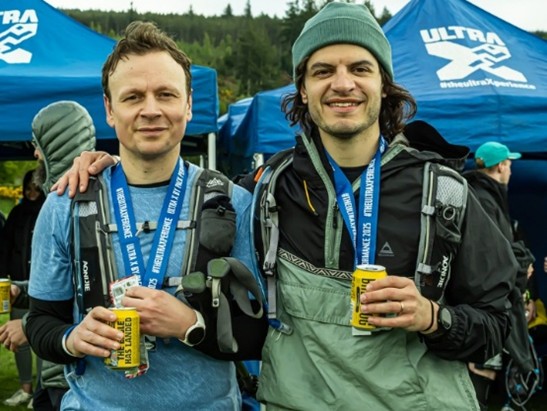


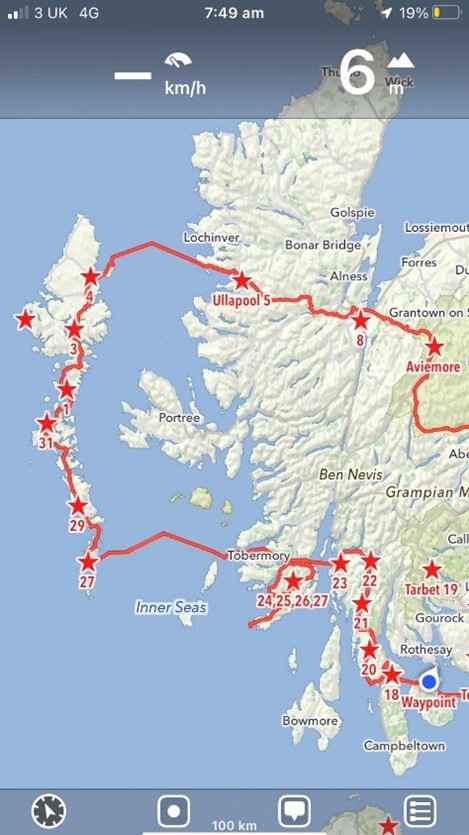
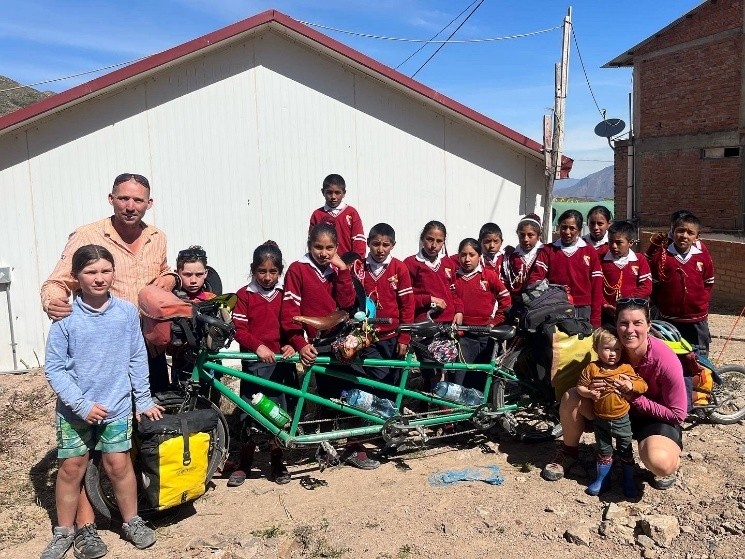
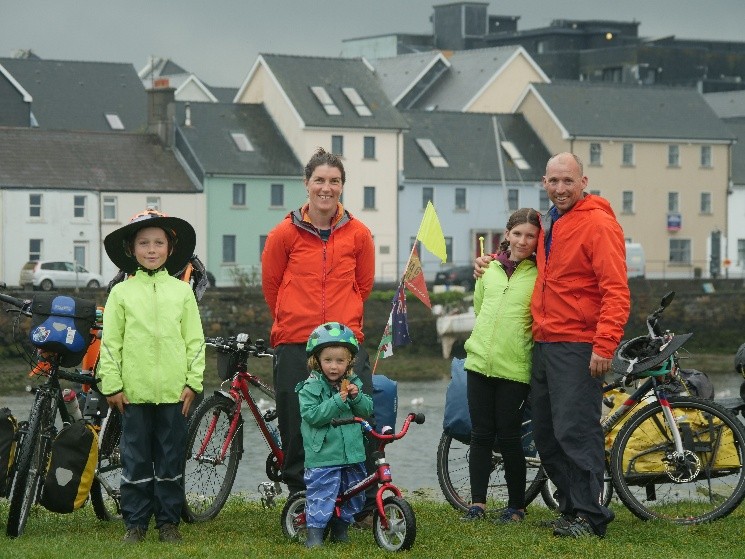


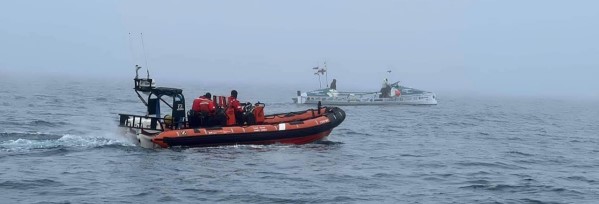


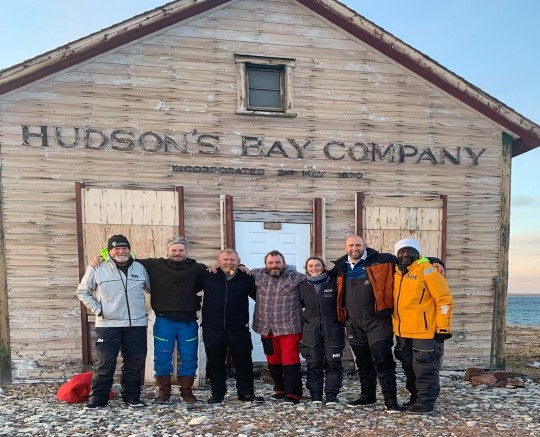
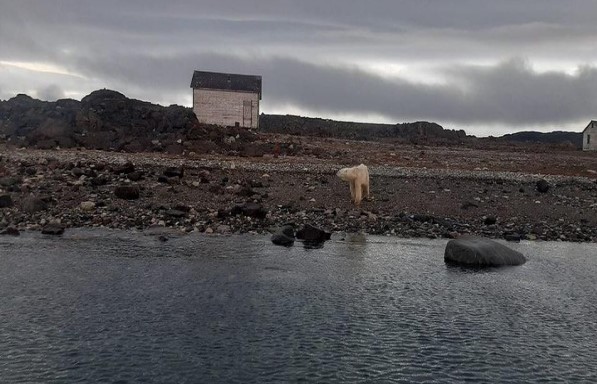

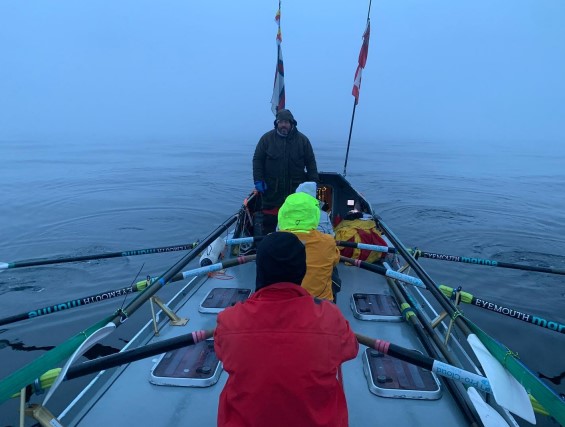

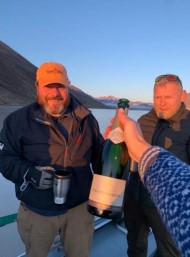
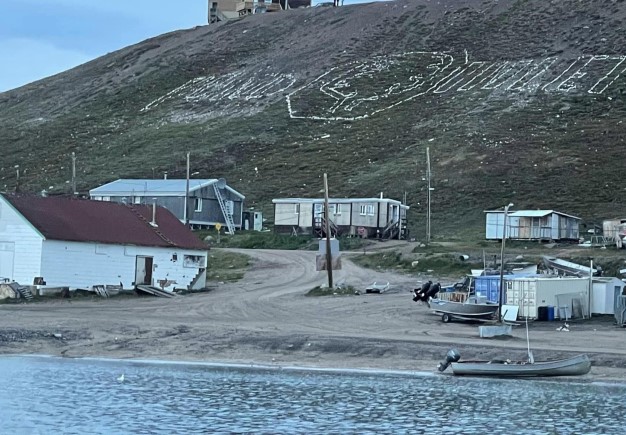


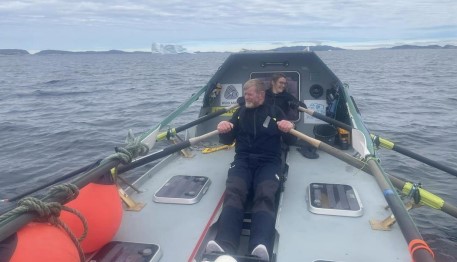
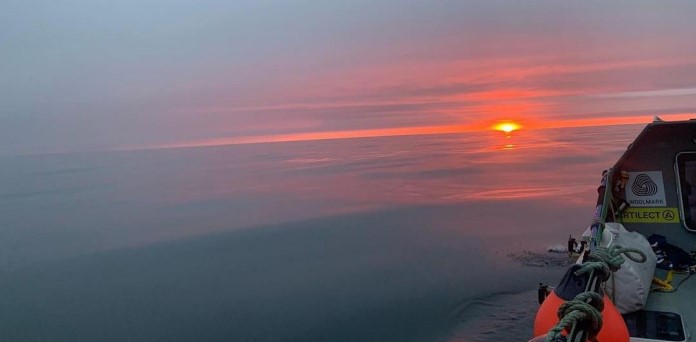


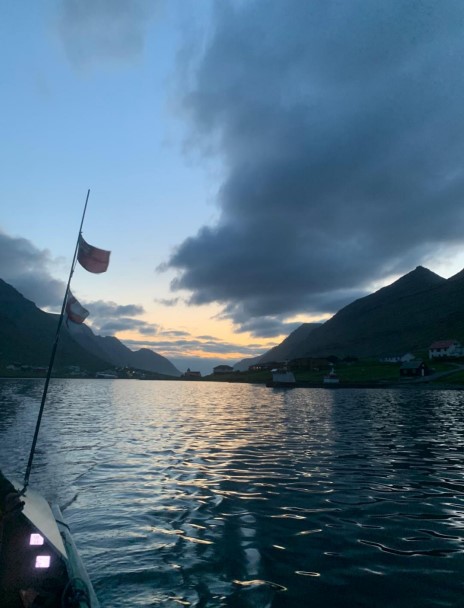

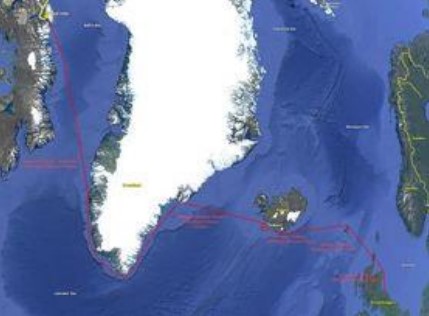
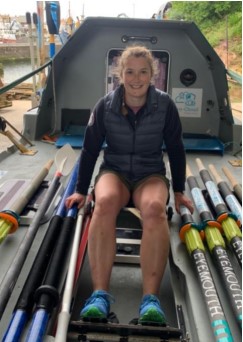
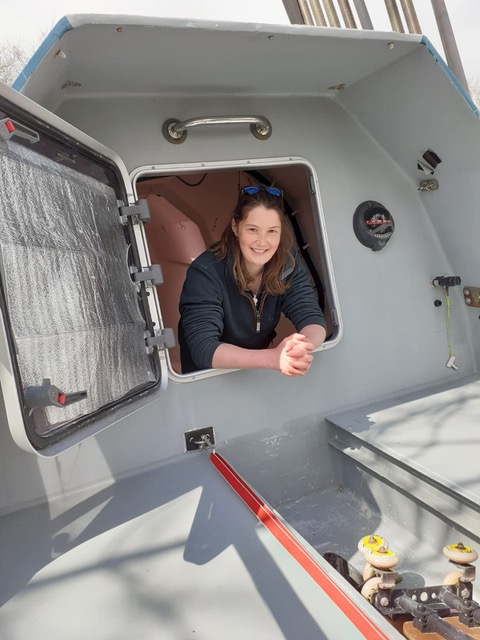


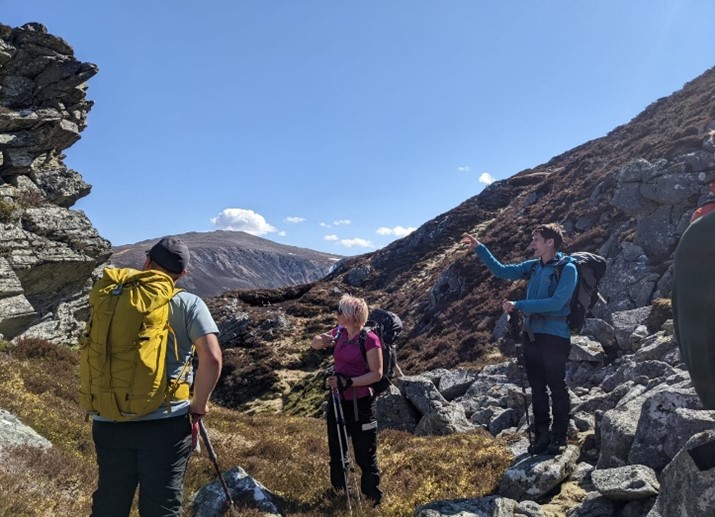


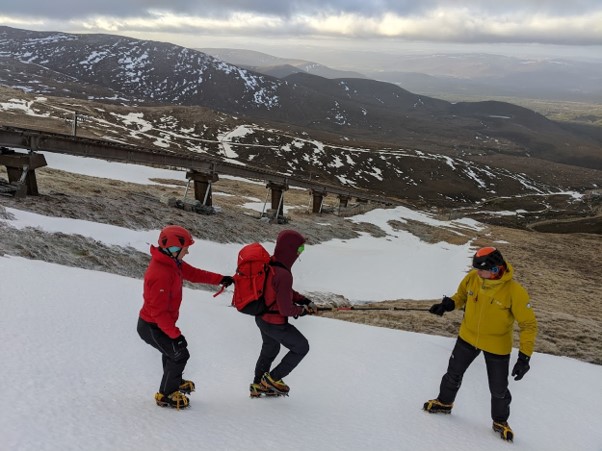


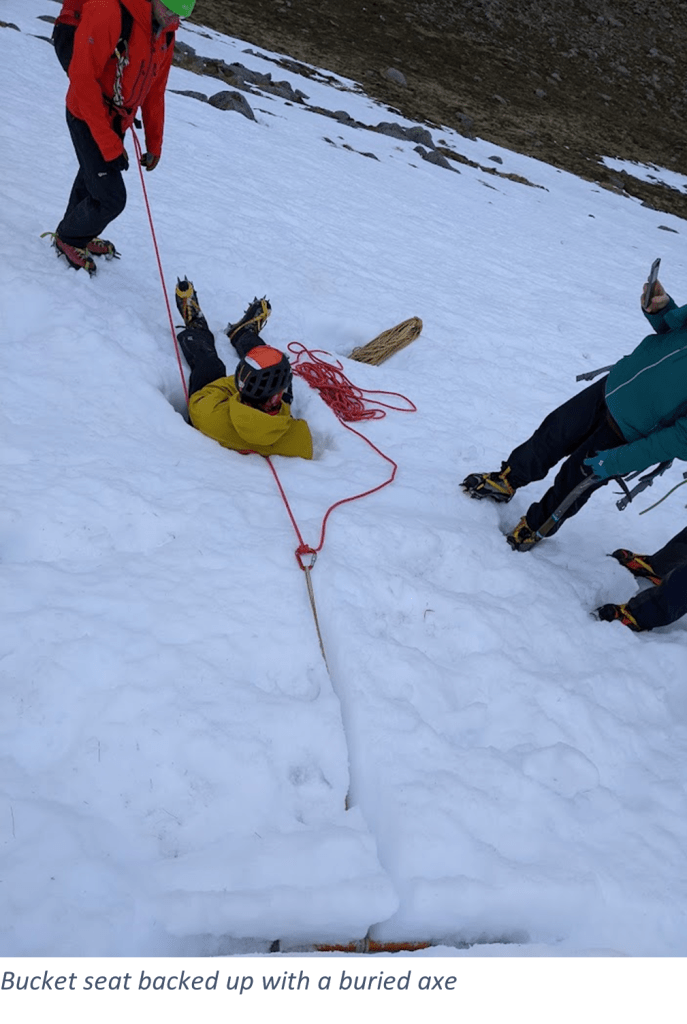

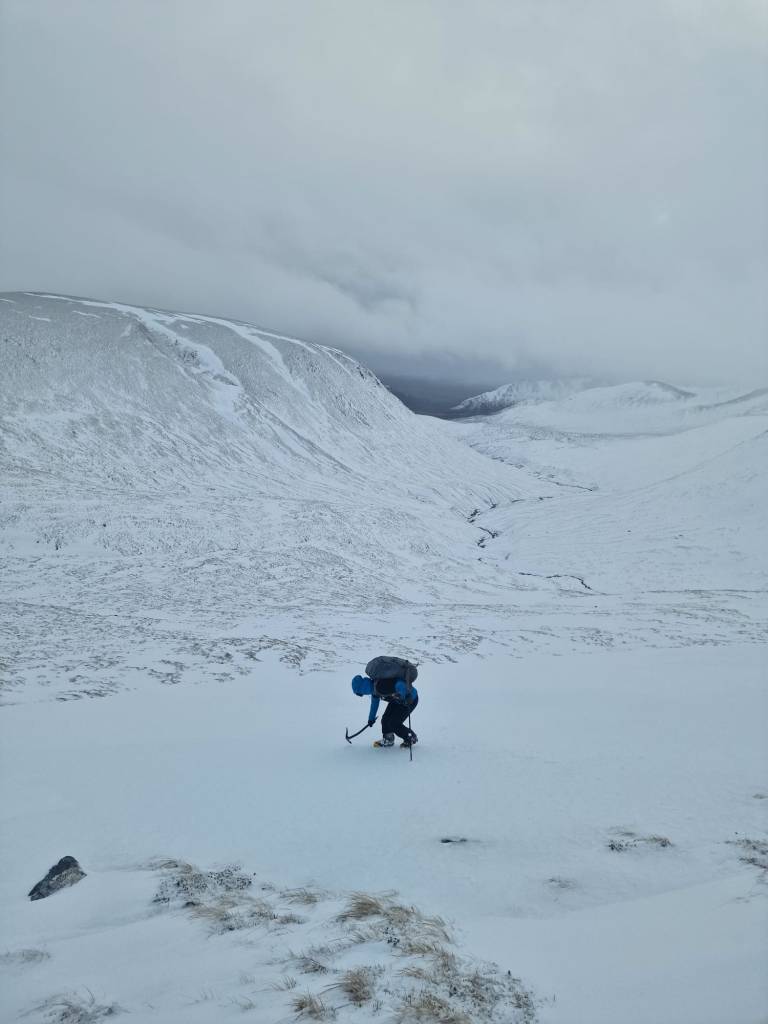

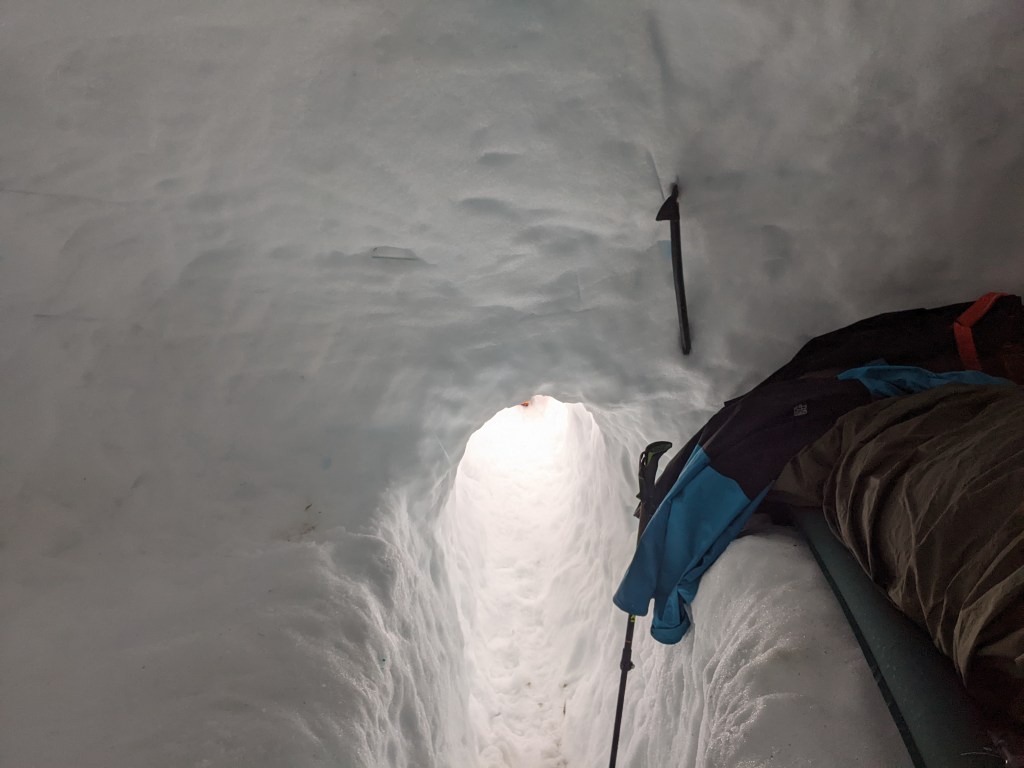
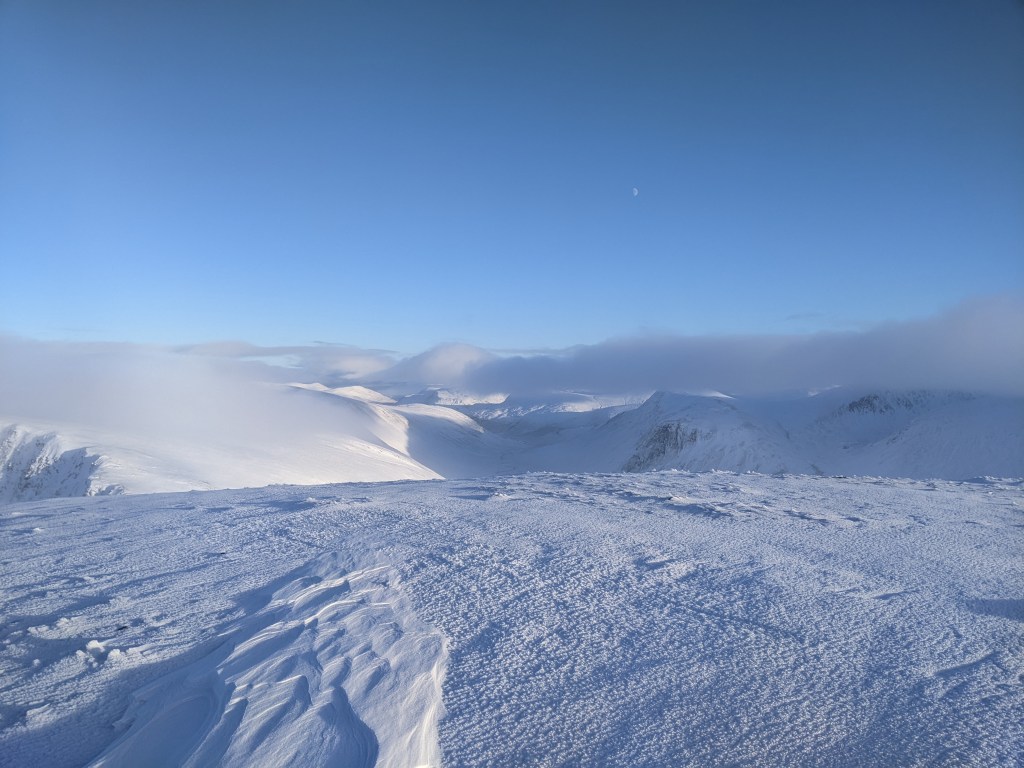


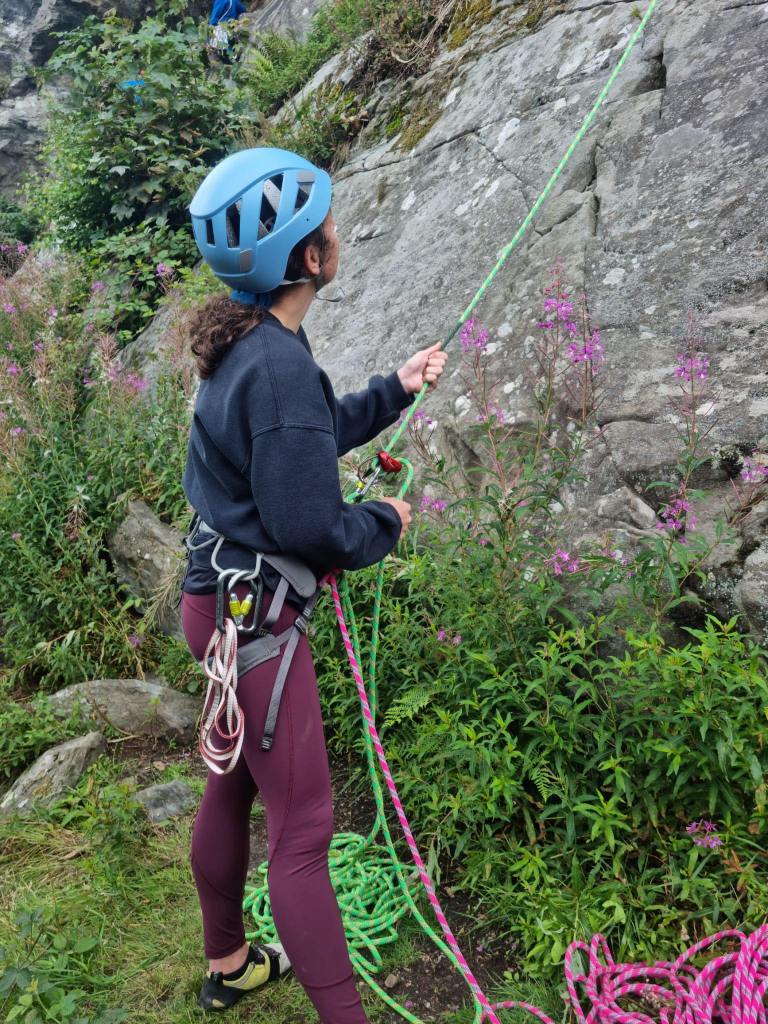


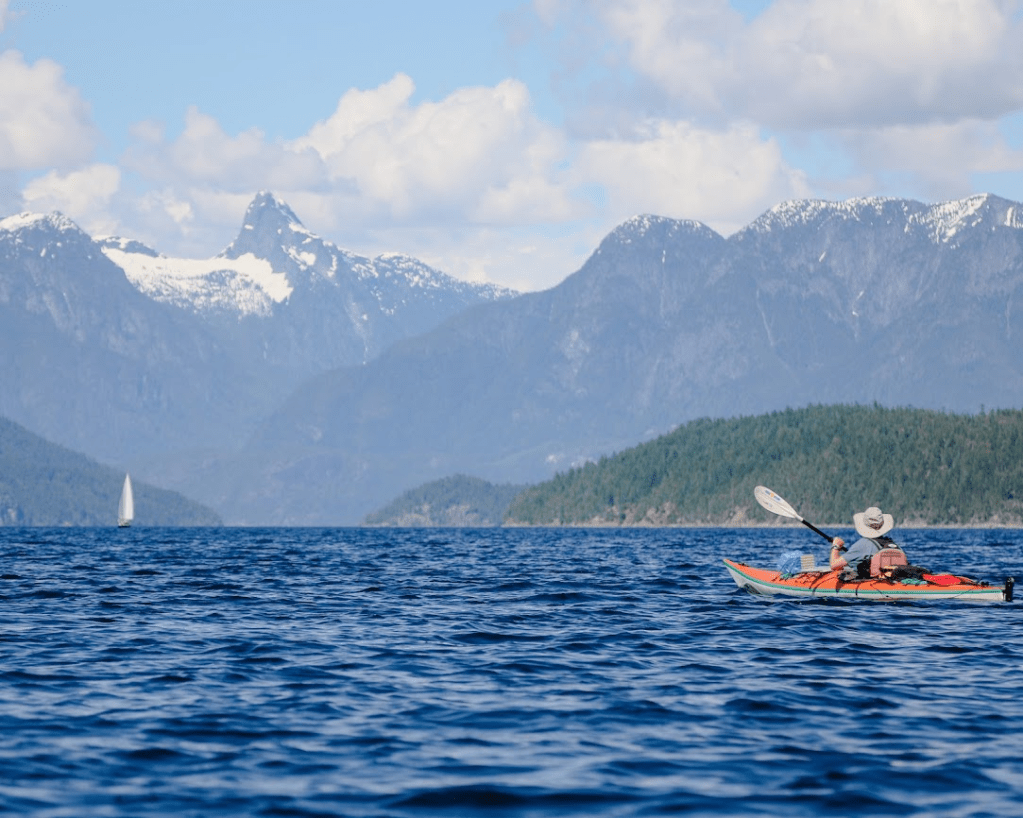

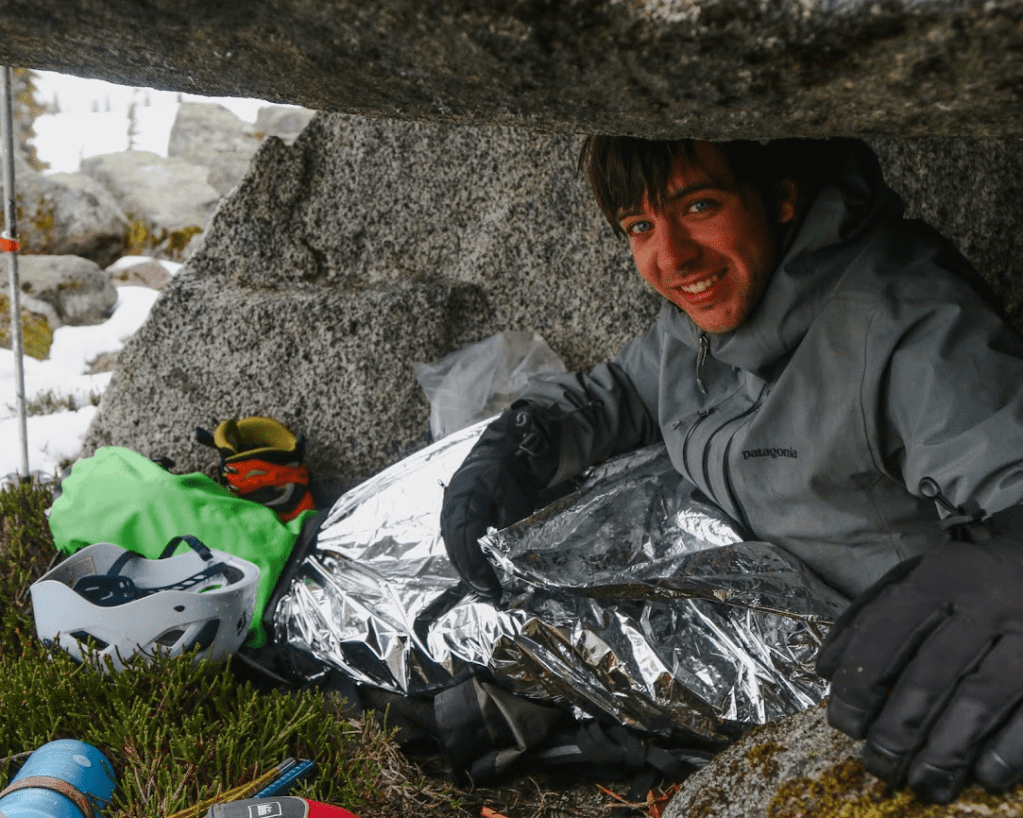

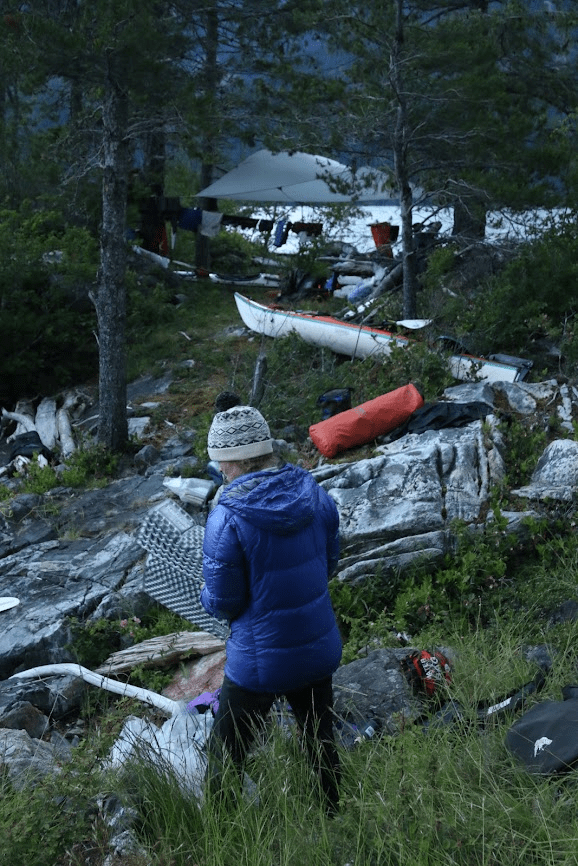


 The Neil Mackenzie Trust